Introduction
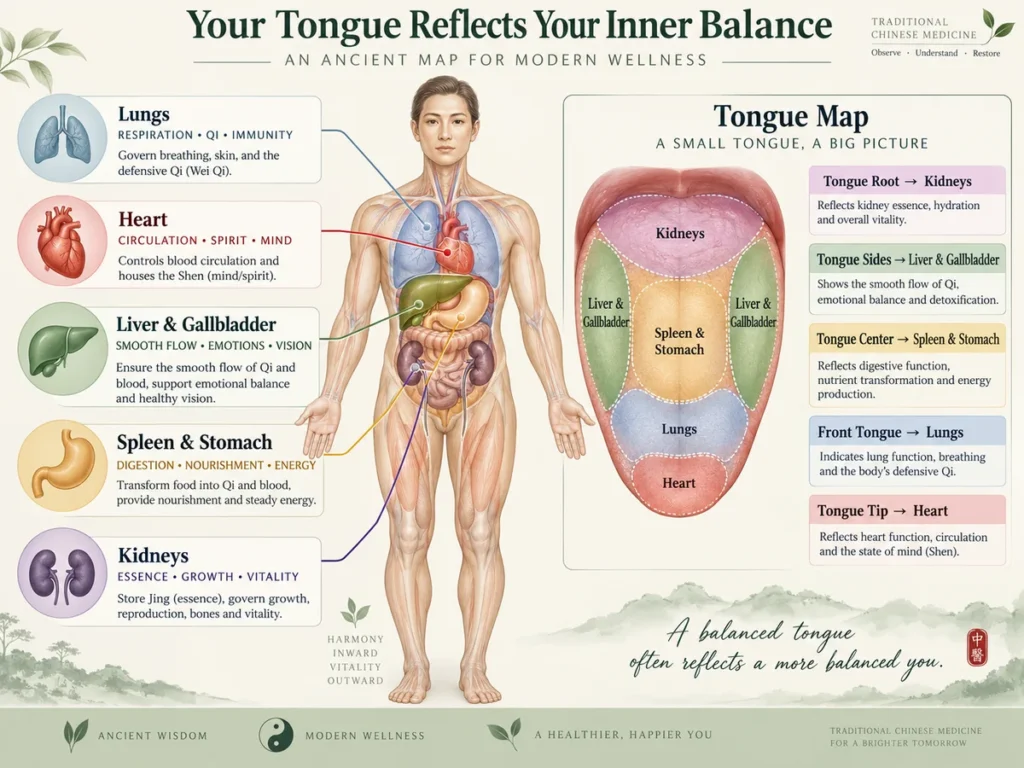
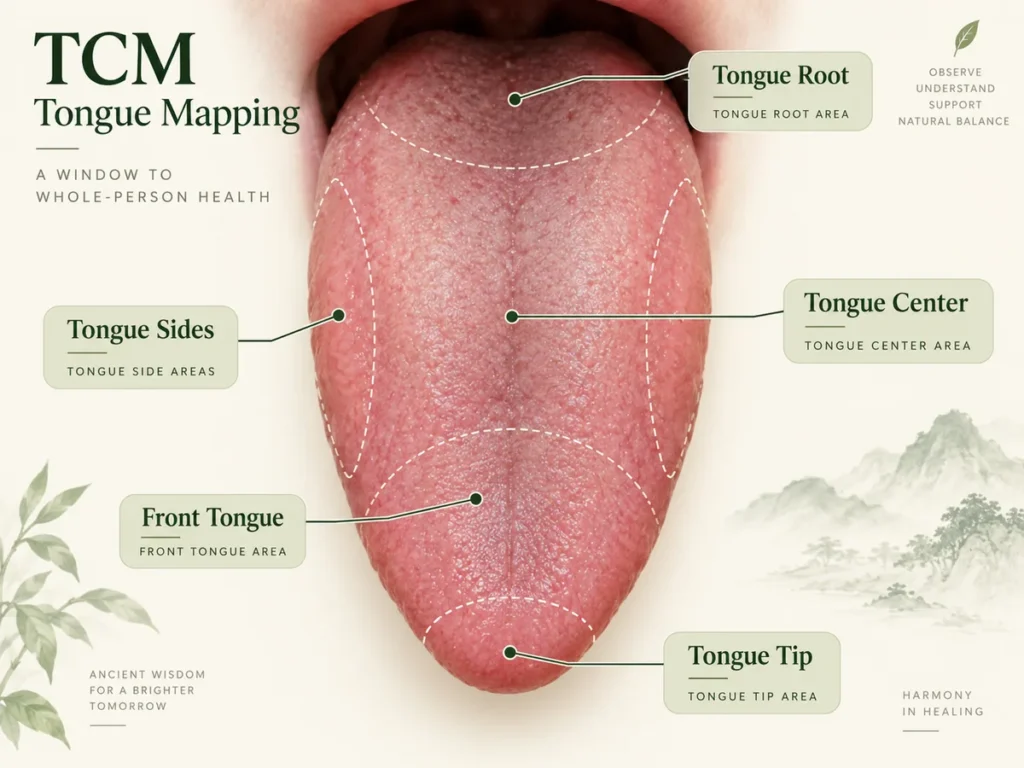
TCM tongue mapping is a traditional way of observing the tongue by area, color, coating, moisture, shape, and surface changes. The video behind this article gives a quick map: the center is linked with the spleen and stomach systems, the tip with the heart system, the front with the lung system, the root with the kidney system, and the sides with the liver and gallbladder systems. This is a Traditional Chinese Medicine interpretation. It is not a medical diagnosis or a substitute for an oral examination.
What TCM Tongue Mapping Looks At
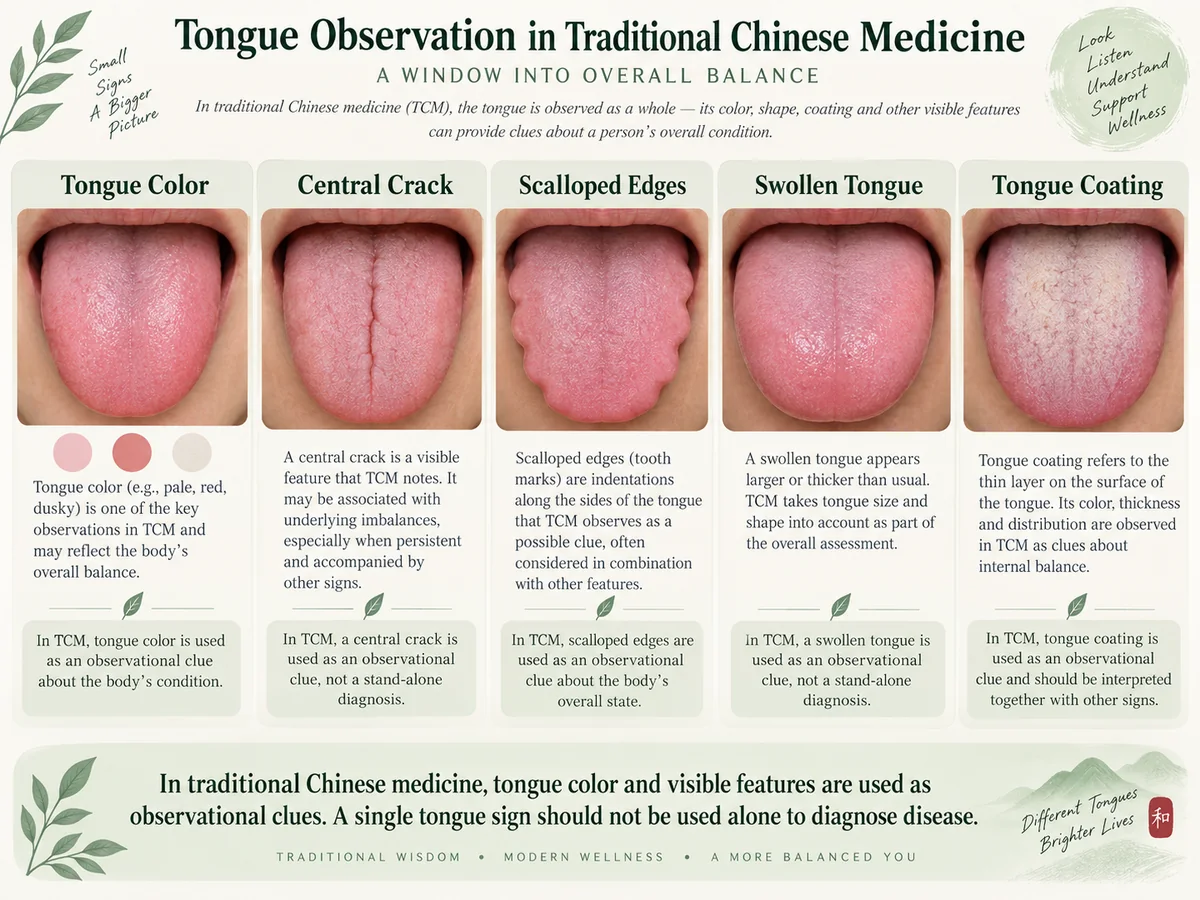
A tongue reading in this tradition does not rely on location alone. The same area may be described differently depending on whether it has a crack, teeth marks, swelling, a pale or red color, or a white or yellow greasy coating. The video pairs each visible sign with a traditional pattern. These associations should be read as part of the TCM framework rather than as proof of disease in an anatomical organ.
The TCM tongue map in the video uses five main regions. Looking at all five together helps explain why one sign should not be interpreted in isolation.
Common Signs in the TCM Tongue Map
- Center of the tongue: The video links this area with the TCM spleen and stomach systems. A center crack is associated with weakness in these systems. Teeth marks in the center are linked with Spleen qi deficiency pattern. A yellow greasy coating is described as damp heat affecting the spleen and stomach, while a white greasy coating is associated with cold or deficiency and heavier phlegm-dampness.
- Tip of the tongue: The tip is linked with the TCM heart system. A red tip is associated with heart fire. Teeth marks are linked with Heart qi deficiency pattern, and a pale tip with Heart blood deficiency pattern. Red or dark spots are described as possible signs of Blood stasis pattern, sometimes discussed with heat in the traditional framework.
- Front of the tongue: The front is linked with the TCM lung system. The video associates a crack here with Lung yin deficiency pattern and teeth marks with Lung qi deficiency pattern.
- Root of the tongue: The root is linked with the TCM kidney system and mingmen. A crack is associated with Kidney essence deficiency pattern, while teeth marks are linked with Kidney qi deficiency pattern. A white coating at the root is associated with Kidney yang deficiency pattern. A yellow coating is described as damp heat in the lower burner.
- Sides of the tongue: The sides are linked with the TCM liver and gallbladder systems. Swollen sides are associated with Liver qi stagnation pattern. Red sides are linked with liver fire, while pale sides are associated with Liver blood deficiency pattern.
How TCM Traditionally Explains TCM Tongue Mapping
In Traditional Chinese Medicine, organ names often describe functional systems rather than the same anatomical organs used in modern medicine. For example, Spleen qi deficiency pattern is a traditional pattern associated in the source video with teeth marks in the tongue center. It does not mean that the anatomical spleen is damaged. The same boundary applies to heart, lung, kidney, liver, and gallbladder language in TCM tongue mapping.
Coating also has a specific traditional role. A greasy white coating may be discussed with cold, deficiency, or Damp phlegm pattern. A greasy yellow coating may be discussed with Damp heat pattern. These are TCM pattern concepts, not confirmed explanations for a coating seen in the mouth. Modern causes of tongue color and coating changes can be different and require an appropriate clinical evaluation.
How to Use a Tongue Reading Carefully
Lighting, food, drinks, smoking, oral hygiene, and temporary irritation can change how the tongue looks. If you compare your tongue over time, use similar natural light and avoid judging it immediately after strongly colored food or drink. Treat the result as an observation, not a diagnosis.
A trained practitioner would normally consider the whole presentation, including symptoms and other traditional observations. One crack, tooth mark, spot, or coating cannot establish a TCM pattern by itself. TCM tongue mapping is most useful as a prompt for a fuller conversation rather than a self-treatment instruction.
Final Note
TCM constitutions and pattern interpretations vary between people, and similar tongue signs can have different causes. This article is for traditional herbal and health education and does not provide a medical diagnosis. Seek advice from a qualified healthcare professional or dentist for persistent color or texture changes, pain, swelling, sores, or unexplained symptoms. A blue tongue can signal low blood oxygen and needs prompt medical attention.
Further Reading
Explore more TCM tongue diagnosis guidance.