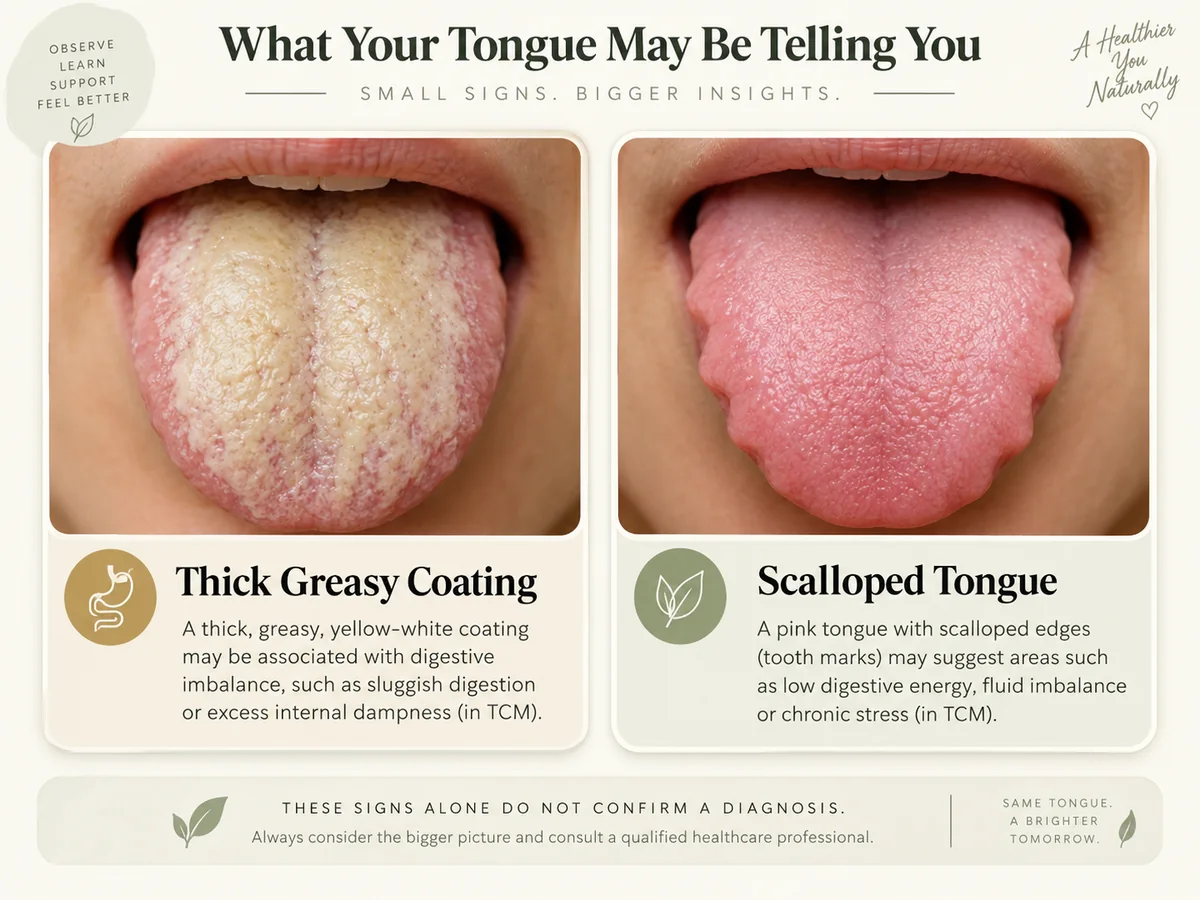
People often search for spleen dampness symptoms when bloating, tiredness, a heavy feeling, or tongue changes seem to appear together. One short TCM video describes a specific cluster: a soft, enlarged abdomen that is hard to reduce, frequent fatigue, digestive discomfort, a thick greasy tongue coating with teeth marks, and oily skin or hair. These signs do not establish a medical diagnosis. They are observations that the speaker interprets through a Traditional Chinese Medicine pattern involving Spleen deficiency and retained dampness.
Common Spleen Dampness Symptoms Mentioned in the Video
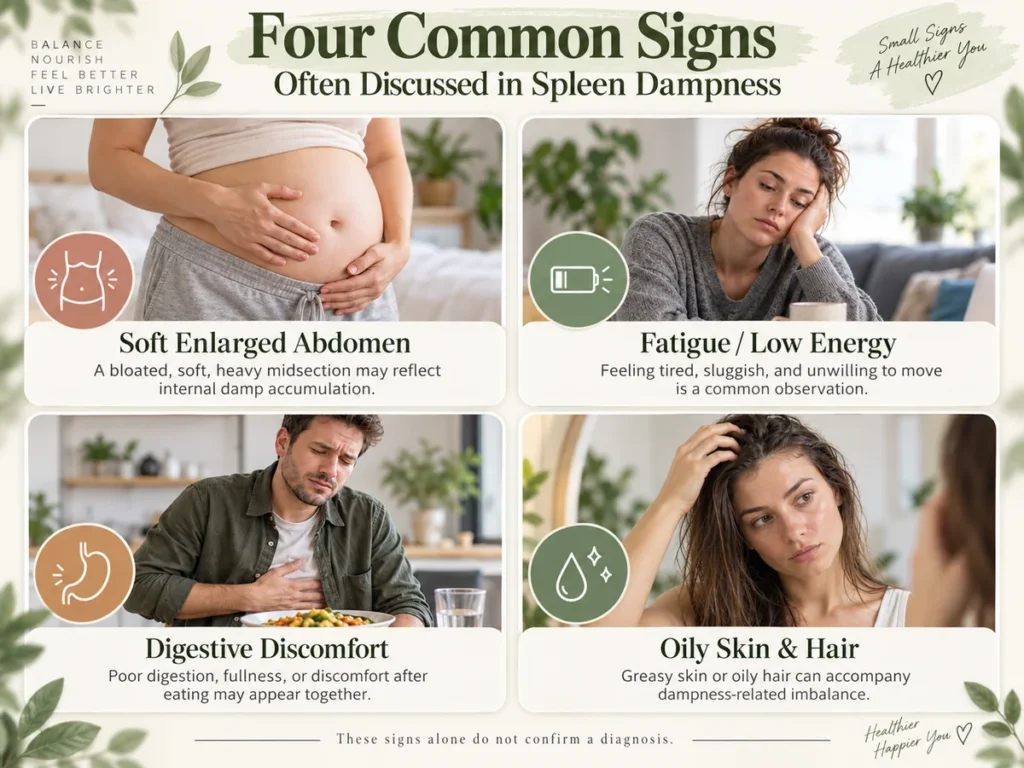
- A soft, enlarged abdomen. The speaker describes a belly that looks full and remains difficult to reduce even when the person does not eat very much.
- Fatigue and low motivation. The person may feel tired easily and prefer lying down rather than moving around.
- Digestive discomfort. The video mentions frequent gastrointestinal discomfort and easy bloating or gas.
- Tongue, mouth, skin, and hair changes. The speaker points to a thick, greasy tongue coating, tooth marks along the tongue, an unusual sensation in the mouth or throat, and hair or skin that becomes oily soon after washing.
How TCM Traditionally Explains Spleen Dampness Symptoms
In TCM, the word Spleen refers to a traditional functional system associated with the transformation and movement of food and fluids. It does not mean that the anatomical spleen is diseased. The video’s phrase pi xu shi zhi can be understood as Spleen deficiency with retained dampness, a traditional pattern rather than a biomedical diagnosis.
The terminology matters because dampness is also a TCM theory concept. In this context, it describes internal dampness: a traditional way of grouping heaviness, sluggishness, digestive discomfort, and sticky or greasy signs. It is not humidity trapped in the body, and it is not the same as swelling, infection, high cholesterol, or any other modern condition.
Within that framework, the video links reduced digestive transformation with the buildup of dampness. That traditional explanation is why its list of spleen dampness symptoms combines abdominal fullness, fatigue, a greasy tongue coating, and oily hair or skin. A clinician using modern medicine would assess those concerns by their own causes, history, examination, and any needed tests.
Why Bloating and Fatigue May Appear Together
Bloating and fatigue can occur together for many reasons, so this combination should not be used to identify a TCM pattern on its own. The video treats them as connected only within its traditional framework. It also warns against assuming that strict dieting or intense exercise is the only answer when the person already feels weak and sluggish.
That message should be read carefully. The video does not prove that dampness causes weight gain, oily skin, or abnormal blood lipids. Persistent bloating, unexplained weight change, ongoing fatigue, or abnormal test results deserve appropriate medical evaluation, especially when symptoms are new, severe, or getting worse.
Traditional Herbal Approach in the Video
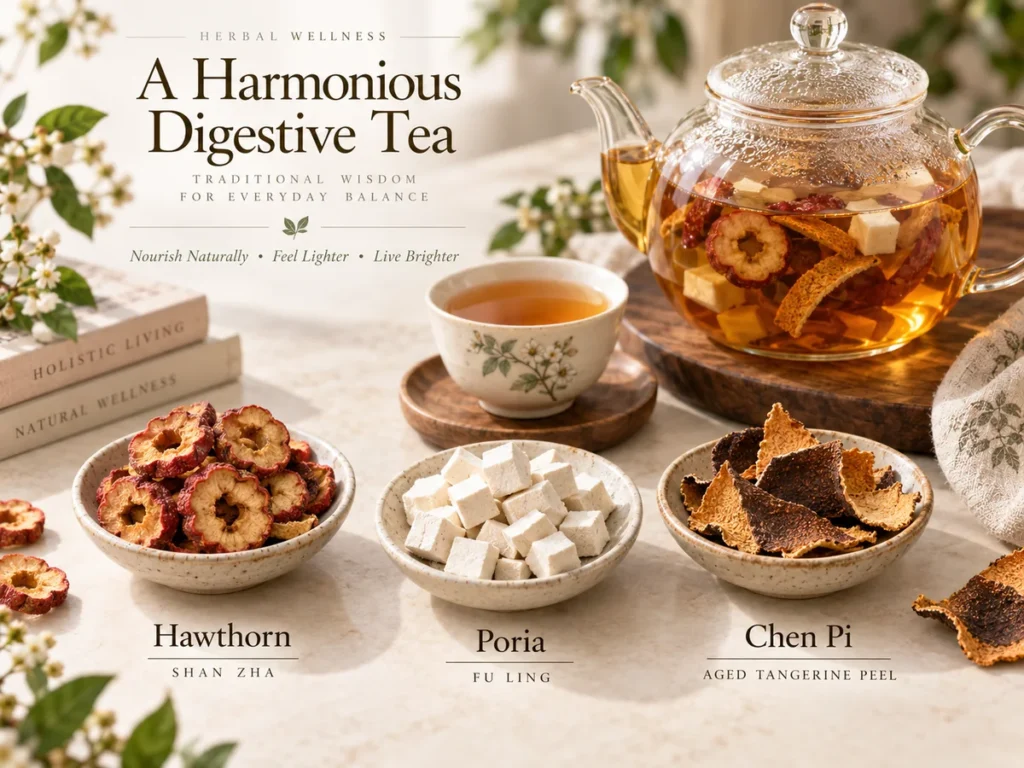
The speaker gives one simple tea-style preparation. The quantities stated in the video are 10 grams of hawthorn fruit, 10 grams of poria, and 5 grams of dried tangerine peel, simmered in water and taken like tea. In TCM practice, the speaker traditionally associates this combination with supporting digestion, the TCM Spleen system, and the movement of qi and dampness.
These quantities reproduce the video; they are not a personalized prescription. Hawthorn, poria, and dried tangerine peel can be inappropriate for some people or interact with medicines. Hawthorn in particular has limited evidence for most promoted uses and may cause side effects or interact with drugs. Pregnant or breastfeeding people, children, people with chronic illness, and anyone taking medication should ask a qualified clinician or licensed herbal professional before using the mixture.
Final Note
TCM constitutions and patterns vary from person to person, and the same spleen dampness symptoms may have very different causes. This article is for education about traditional herbal and wellness concepts and does not provide a diagnosis or treatment plan. Seek qualified medical advice for persistent, severe, or unexplained symptoms, and use herbs only with appropriate safety guidance.
Further Reading
Explore more traditional herbal wellness articles.