

Introduction
When loss of appetite and fatigue appear together, eating enough can become difficult. You may be underweight, feel that you cannot gain weight even when you eat, or have little interest in food. The video behind this article groups these experiences with poor digestion and explains them through Traditional Chinese Medicine. It also mentions a traditional formula called Xiang Sha Yang Wei.
This is a traditional interpretation, not a diagnosis. Loss of appetite and weight loss can have many causes, and a short video cannot show why they are happening to one person. Ongoing or unexplained weight loss deserves a medical assessment, especially when digestive symptoms continue.
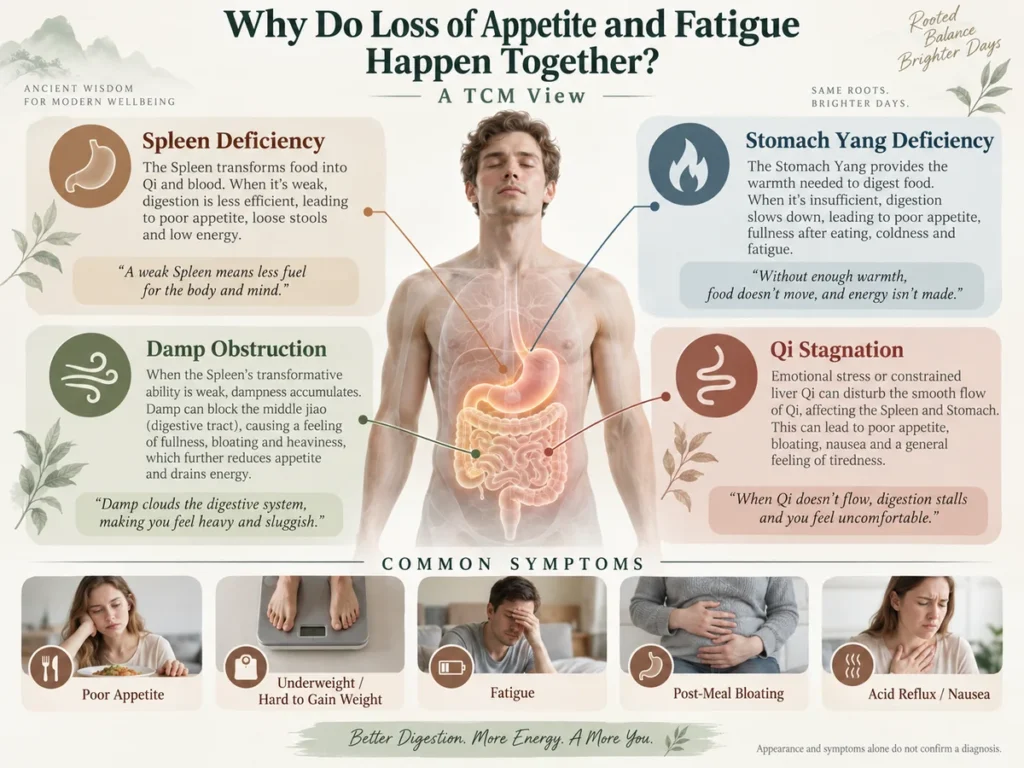
Common Signs Mentioned in the Video
The speaker describes a cluster of signs rather than one isolated complaint:
- Low body weight or difficulty gaining weight
- Poor appetite or no desire to eat
- Low energy and feeling tired through the day
- A dull, uncomfortable feeling in the stomach
- Bloating or fullness after meals
- Acid reflux, nausea, or an urge to vomit
Some readers search for how to gain weight when you have no appetite, but the video does not present a calorie plan or a proven weight-gain treatment. It focuses on a TCM pattern and a traditional herbal approach. The same signs may also occur for reasons outside the TCM framework.
How TCM Traditionally Explains Loss of Appetite and Fatigue
From a Traditional Chinese Medicine perspective, the main idea in the video is Spleen deficiency pattern, or pí xū. The TCM Spleen is a functional system used to describe traditional ideas about transforming food and transporting nourishment. It is not the anatomical spleen, and Spleen deficiency does not mean that a person has spleen disease.
The speaker uses the traditional saying that when the Spleen is deficient, food and herbs may not be used well. In everyday language, the video connects this pattern with poor appetite, low energy, difficulty gaining weight, and discomfort after eating. TCM practitioners would normally assess the entire presentation before applying a pattern name.
The video also mentions Stomach yang deficiency, dampness obstruction, and qi stagnation. These are traditional concepts rather than confirmed biomedical causes. In the terminology used by TCM, dampness may describe heaviness or digestive sluggishness, while qi stagnation may describe distension or discomfort. Neither term proves a structural blockage, a problem with nutrient absorption, or a specific digestive disease.
Traditional Herbal Approach Mentioned in the Video
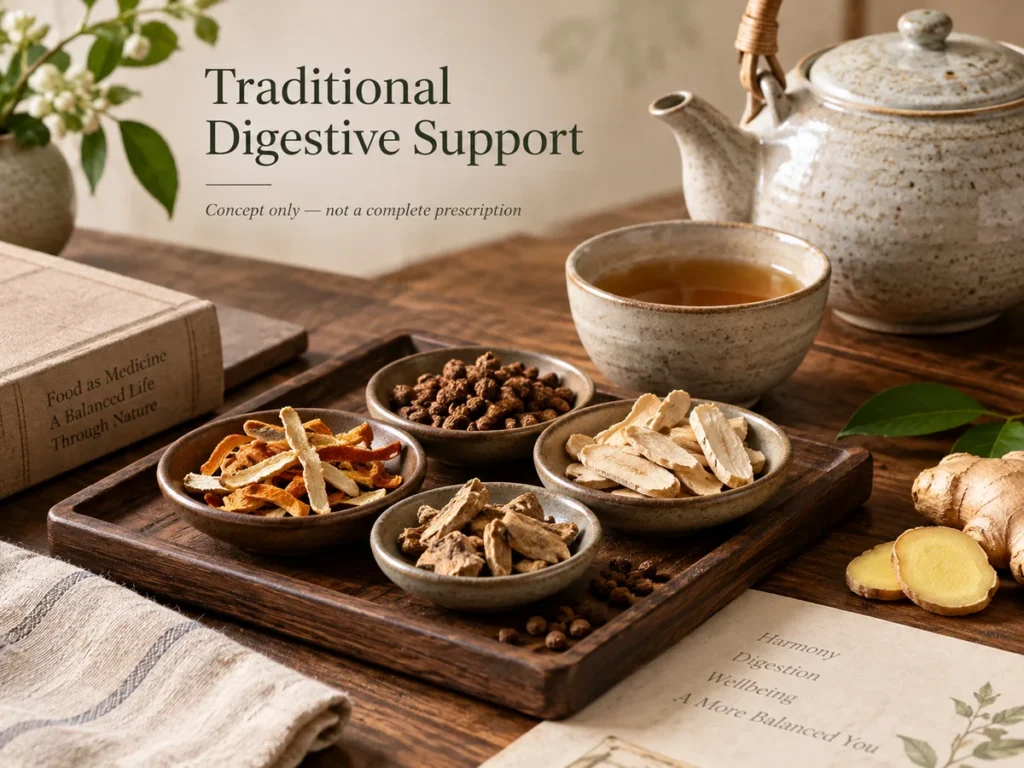
For loss of appetite and fatigue with the digestive signs above, the speaker introduces Xiang Sha Yang Wei, using a shortened name for a traditional formula. The video names six ingredients and gives their traditional roles:
- Mu Xiang and Xiang Fu, traditionally described as regulating qi and easing pain
- Bai Zhu and Fu Ling, traditionally associated with supporting the TCM Spleen and addressing dampness
- Sha Ren and Dou Kou, traditionally described as transforming dampness and warming the TCM Stomach
The formula is presented for a pattern involving dull stomach discomfort, bloating after meals, acid reflux, nausea, and poor appetite. That traditional indication does not show that the formula treats every case of acid reflux and bloating, and it should not be selected from symptoms alone.
The clip does not provide a complete ingredient list, dose, product form, preparation method, treatment length, or contraindications. Do not reconstruct or self-prescribe the formula from this summary. Chinese herbal products can cause side effects, interact with medicines, and vary in composition and quality. Ask a qualified TCM practitioner and a pharmacist or other healthcare professional to review the exact product, your health history, and every medicine or supplement you use. Extra caution is appropriate during pregnancy, breastfeeding, childhood, and before surgery.
When Low Weight Needs Medical Attention
If loss of appetite and fatigue continue, or if your weight keeps falling without a planned change in diet or activity, arrange a medical review. A clinician can look for nutritional, digestive, medication-related, mental health, and other possible causes without assuming that one explanation fits everyone.
Seek prompt care for severe or worsening stomach pain, repeated vomiting, trouble keeping fluids down, vomiting blood, black stools, fainting, or marked weakness. Traditional pattern language and herbal products should not delay appropriate testing or treatment.
Final Note
TCM patterns vary from person to person, and similar symptoms may have different causes. This article is for education about traditional herbal and wellness concepts and does not provide a medical diagnosis. Loss of appetite and fatigue, low weight, reflux, or persistent digestive discomfort should be discussed with a qualified healthcare professional. Use Chinese herbal formulas only with individualized guidance.
Further Reading
- when unintentional weight loss needs medical review
- safety of Traditional Chinese Medicine herbal products
Explore more traditional herbal wellness articles.