
Introduction
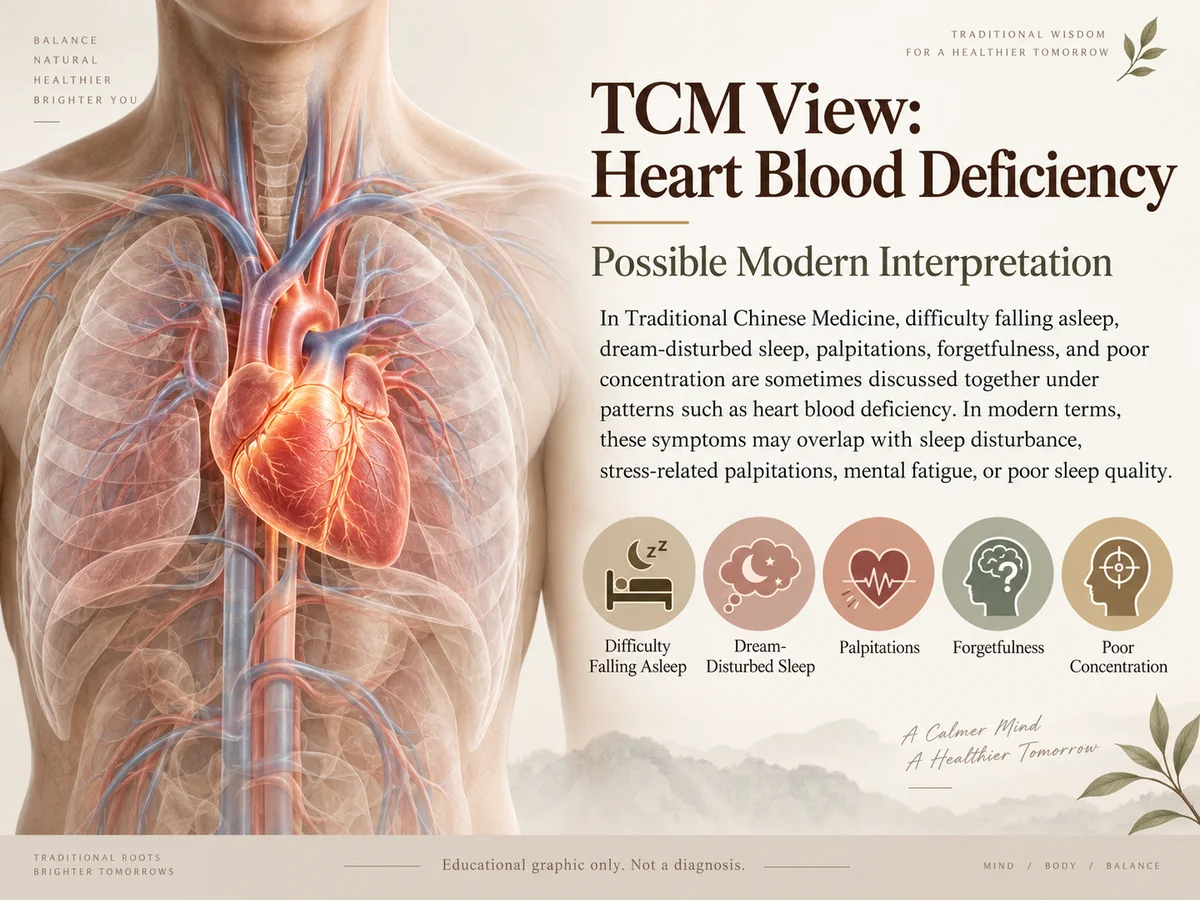
A herbal tea for insomnia may sound appealing when you struggle to fall asleep, wake from vivid dreams, or notice a pounding heartbeat at night. The video behind this article connects those experiences with Heart blood deficiency, a Traditional Chinese Medicine pattern. It also mentions a three-herb tea. This traditional explanation does not mean that poor sleep or palpitations prove a TCM pattern, and it does not mean that the anatomical heart lacks blood.
Sleep problems, forgetfulness, and palpitations can have many causes. The video provides a narrow TCM teaching point rather than a medical assessment, so its herbal suggestion needs individual review before use.
Common Signs You May Notice
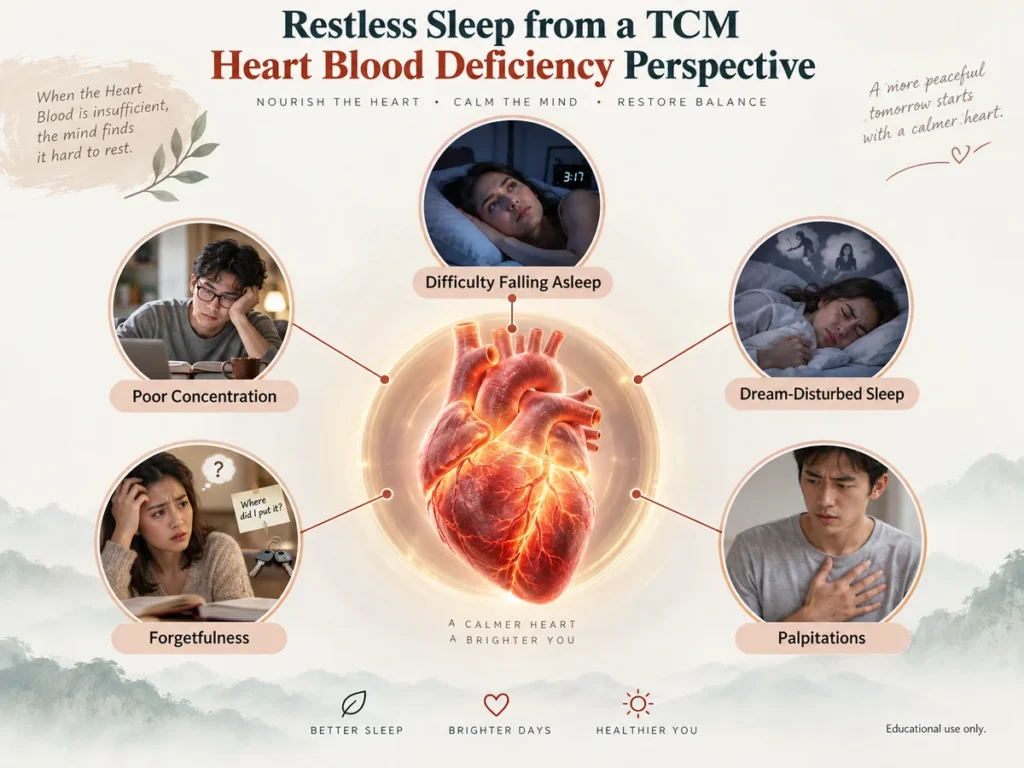
The speaker describes several experiences that may occur together:
- A fluttering, pounding, or uneasy heartbeat
- Difficulty falling asleep
- Frequent dreams and waking easily
- A frightened or unsettled feeling
- Forgetfulness, slower reactions, or trouble concentrating
These signs are not specific to one condition. If palpitations are new, keep returning, last more than a few minutes, or become more intense, arrange a medical review. Seek urgent care when palpitations occur with chest pain, shortness of breath, fainting, or a feeling that you may faint. Read the NHS guidance on when heart palpitations need medical attention.
How TCM Explains Poor Sleep and Palpitations
From a Traditional Chinese Medicine perspective, the video describes Heart blood deficiency pattern, or xīn xuè xū. In TCM, the Heart is a functional system used to organize traditional observations about circulation, mental activity, and sleep. Heart blood deficiency is not the same as anemia, reduced blood flow to the heart, coronary disease, or another biomedical diagnosis.
Within that framework, TCM practitioners may associate Heart blood deficiency with palpitations, disturbed sleep, dizziness, forgetfulness, and a pale appearance. The video specifically links insufficient nourishment of the Heart-mind with difficulty settling to sleep, many dreams, easy waking, slow reactions, and poor concentration. A practitioner would normally consider the whole presentation rather than identify the pattern from one symptom or a short online checklist.
This distinction matters when searching for chinese herbal medicine for insomnia or a herbal tea for insomnia. A traditional pattern name explains how TCM groups signs; it does not establish the cause of insomnia or replace an evaluation for persistent sleep problems.
Herbal Tea for Insomnia Mentioned in the Video
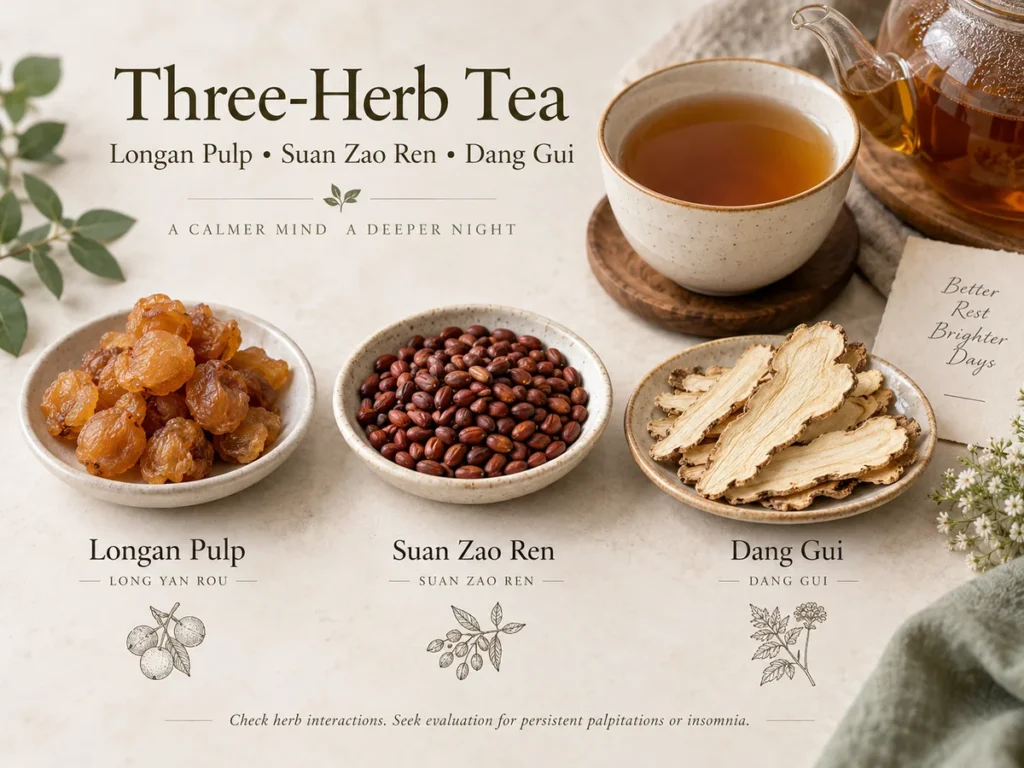
The video suggests boiling three ingredients in water and drinking the liquid as tea:
- Longan aril, or Long Yan Rou, 10 grams
- Sour jujube seed, or Suan Zao Ren, 10 grams
- Dang gui, or Angelica sinensis root, 3 grams
In TCM practice, the speaker describes this combination as traditionally used to nourish blood, support the Heart, and calm the spirit. Those are traditional functions, not proof that the drink treats a sleep disorder. The clip does not explain preparation time, herb quality, contraindications, or how the amounts should change for an individual.
Although people may search for chinese herbs for insomnia or a herbal remedy for insomnia, this three-herb drink should not be treated as a universal recipe. Herbs can cause adverse effects, vary in quality, and interact with medicines. Dang gui deserves particular caution for people who take anticoagulant or antiplatelet medicine, have a bleeding disorder, are pregnant, or are preparing for surgery. Sour jujube seed may also be unsuitable with some sedating medicines. A qualified clinician or pharmacist should review the exact products and your medication list before use. See NCCIH information on the safety of Chinese herbal products.
A herbal tea for insomnia also should not delay care for ongoing insomnia, marked daytime impairment, or repeated palpitations. Bring the ingredient list and the video’s amounts to a qualified TCM practitioner or health professional instead of combining it with other sleep products on your own. MedlinePlus explains insomnia symptoms and evaluation.
Final Note
TCM patterns vary from person to person, and the same symptoms may have different causes. This article is for education about traditional herbal and wellness concepts and does not provide a diagnosis. A herbal tea for insomnia may not be appropriate for everyone. Consult a qualified health professional about persistent, severe, worsening, or unexplained symptoms and before using herbs with medicines.