
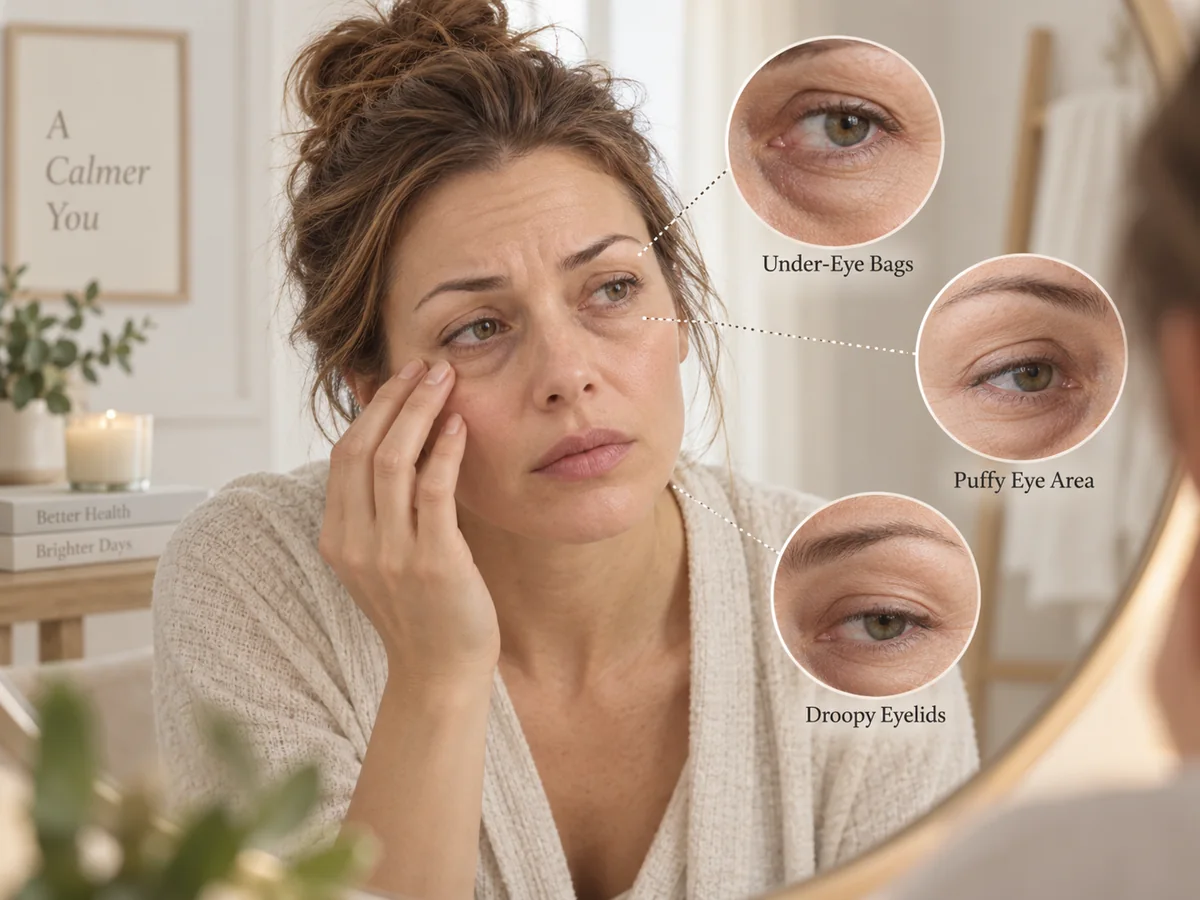
Under-eye puffiness can look more noticeable when the eyelids also feel heavy or begin to droop. People searching for herbal remedies for under eye bags may find Traditional Chinese Medicine explanations that connect these changes with a wider pattern of low energy and fluid retention. One short TCM video describes that pattern, then presents a chicken soup and two acupressure points as traditional approaches. This view can be useful as cultural health education, but it does not identify the medical cause of swelling around the eyes.
Common Signs You May Notice
The video groups the eye changes with several general signs rather than treating the eye area as an isolated cosmetic concern. It specifically mentions:
- Larger or more noticeable under-eye bags
- Puffiness or swelling around the eyes
- Drooping eyelids
- A pale or sallow-looking complexion
- Whole-body fatigue and weakness
- Shortness of breath and little desire to speak
These signs can have many causes. Their appearance together does not prove a TCM pattern or a biomedical condition. Persistent, one-sided, painful, red, itchy, or vision-affecting swelling needs an appropriate medical assessment.
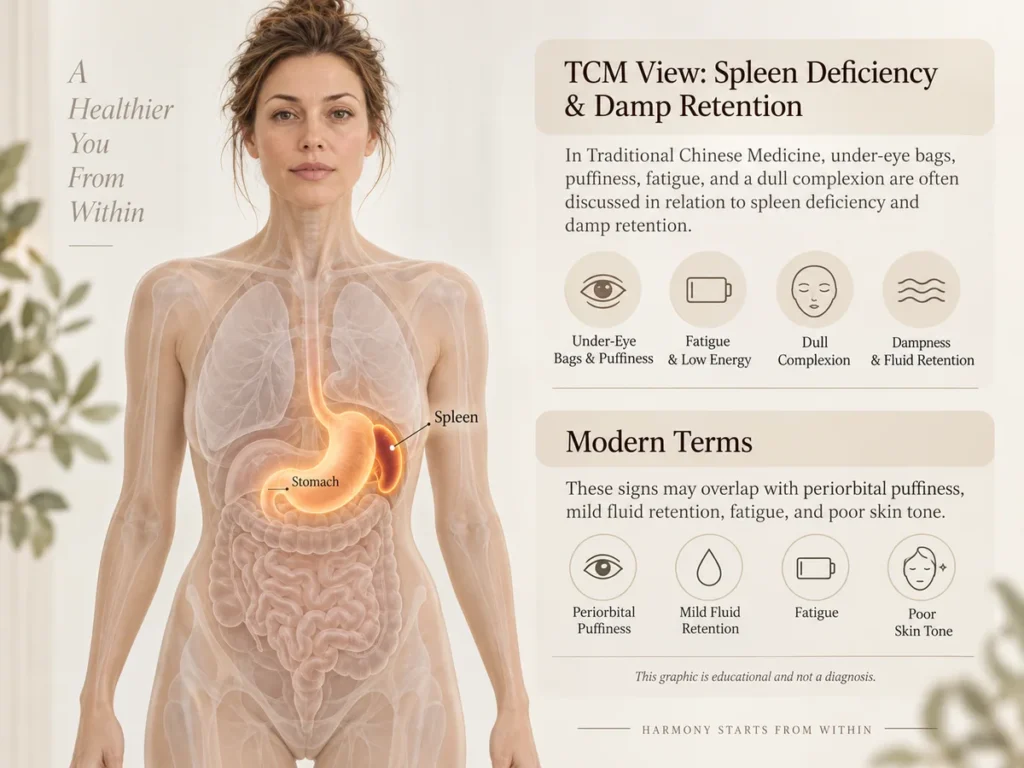
How TCM Explains Herbal Remedies for Under Eye Bags
From a Traditional Chinese Medicine perspective, the video describes these signs as a form of Spleen deficiency pattern. In TCM, the Spleen is a functional system associated with transforming food and fluids and supporting the muscles. It is not the anatomical spleen, and Spleen deficiency is not a diagnosis of spleen disease.
The speaker explains that when this traditional transforming function is weak, dampness may collect in softer tissues. The loose tissue around the eyes is presented as one place where puffiness can become visible. The same traditional explanation is used for the accompanying fatigue, pale complexion, shortness of breath, and reluctance to speak.
This is the framework behind the video’s herbal remedies for under eye bags. It should be understood as a traditional pattern explanation, not proof that retained fluid, muscle weakness, or eyelid changes come from one cause.
Traditional Herbal and Acupressure Approach
The video suggests simmering a chicken soup with 15 grams of huang qi, 10 grams of dang shen, 10 grams of an ingredient transcribed as mai shen, and 3 grams of chen pi. Within the video’s TCM language, the combination is traditionally associated with supporting qi, strengthening the Spleen system, addressing dampness, and reducing puffiness. These are traditional uses, not guaranteed clinical effects.
The name mai shen is unclear in the transcript and should be confirmed against the original video or by a qualified Chinese medicine professional before anyone prepares the soup. Do not substitute a similarly named herb. Exact identification matters because different herbs can have different actions, contraindications, and interactions.
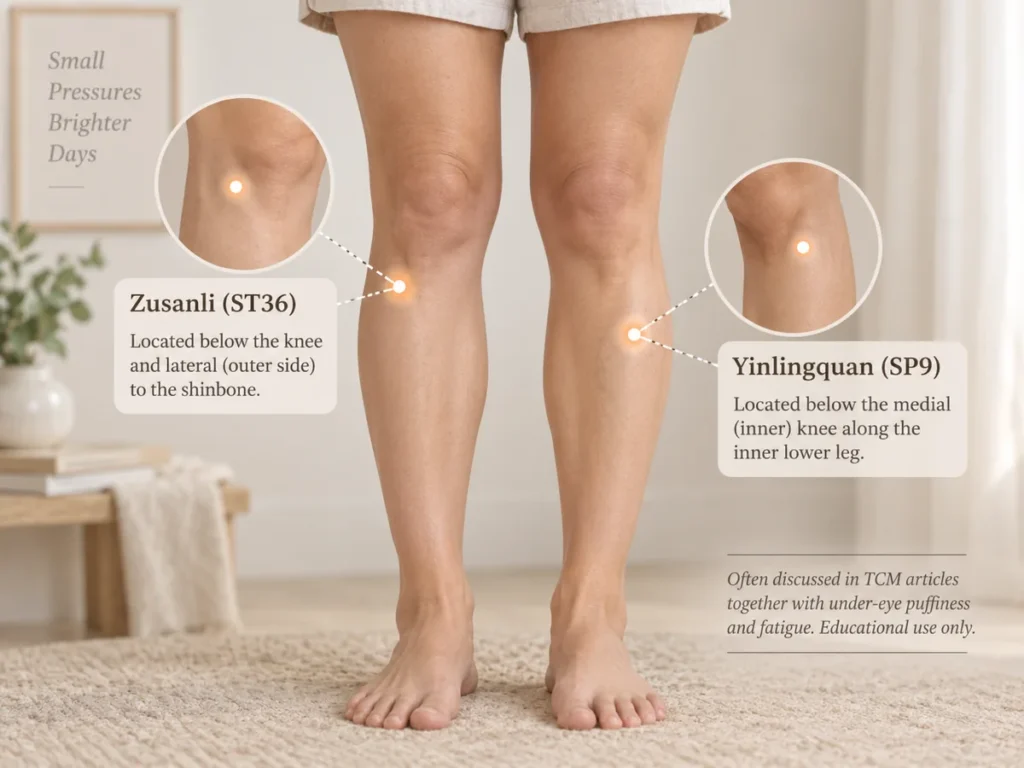
The speaker also recommends pressing Zusanli, commonly called ST36, and Yinlingquan, commonly called SP9. In TCM practice, these points are traditionally associated with supporting the Spleen system and regulating fluids. When considering herbal remedies for under eye bags, remember that the video does not specify pressure duration, frequency, or who should avoid the points, so individualized instructions should come from a qualified practitioner.
For readers comparing eye bags natural remedies or natural remedies for droopy eyelids, the main lesson is caution. A traditional recipe or acupressure routine should not replace an eye examination when the eyelid position changes, swelling persists, or other symptoms appear.
When Under Eye Puffiness Needs Medical Attention
Under-eye bags are often harmless, but a modern medical review may be needed when they cause vision problems, irritation, headaches, or a skin rash. Sudden or worsening swelling, pain, redness, or changes affecting only one eye also deserve prompt attention. A clinician can consider allergies, infection, thyroid problems, skin conditions, and other possible causes rather than assuming that tired and puffy eyes have one explanation.
Final Note
TCM patterns vary from person to person, and similar symptoms can arise for different reasons. This article presents traditional herbal and wellness information for education and does not provide a medical diagnosis. Consult a qualified healthcare professional for persistent, severe, sudden, or unexplained eye swelling, and speak with a qualified practitioner before using herbs, especially when the ingredient name is uncertain or you take medicines.
Further Reading
Explore more traditional herbal wellness articles.