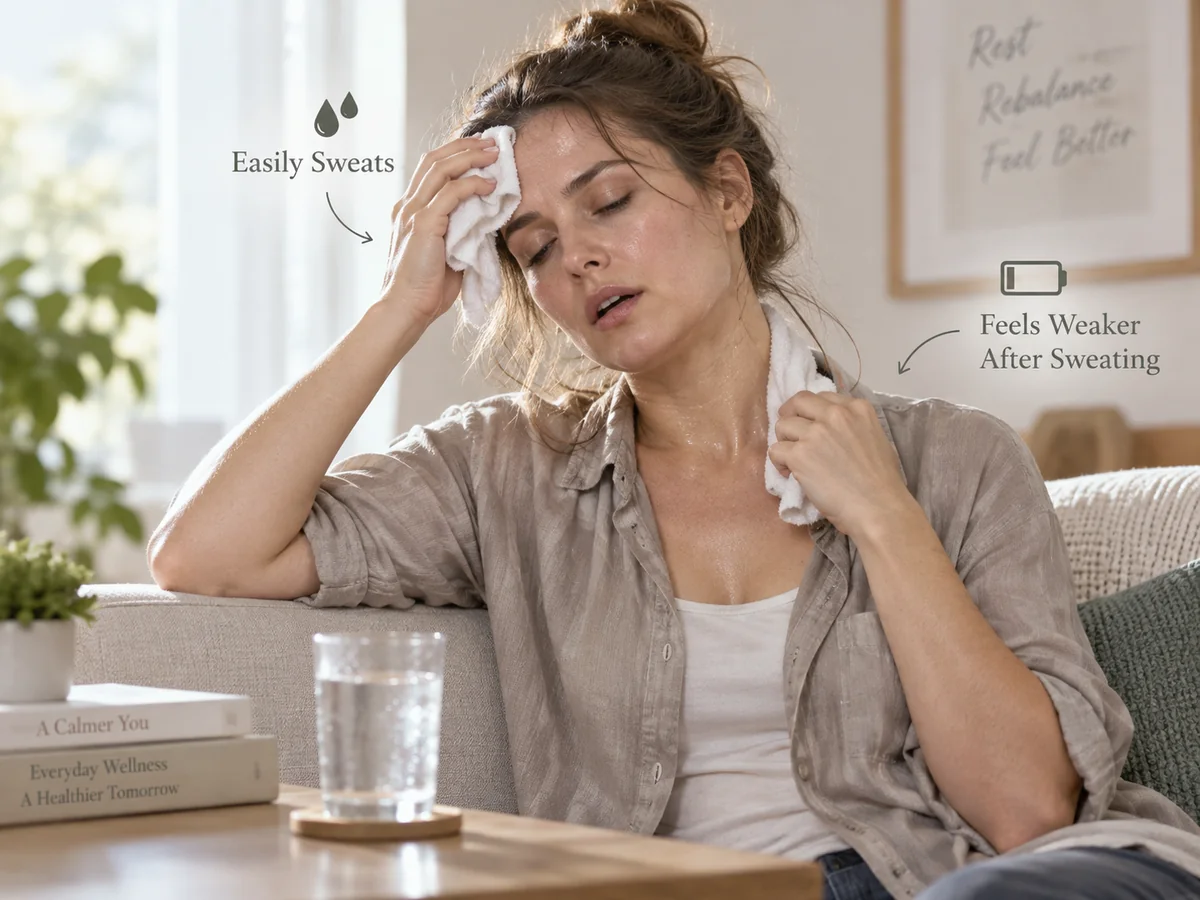
Fatigue and sweating can feel like a cycle: the more you sweat, the weaker you feel, and the less resilient you feel, the easier it may seem to sweat again. A short TCM video describes this pattern through the traditional idea of deficient qi and introduces Sheng Mai Yin, a three-herb formula. This article explains the video in plain English. It does not assume that every case has the same cause, and it does not treat a TCM pattern as a modern medical diagnosis.
Common Signs You May Notice
The video focuses on a small set of experiences rather than a long symptom list:
- Sweating that feels frequent or difficult to stop.
- Feeling increasingly weak or depleted as sweating continues.
- A repeating pattern in which weakness and sweating seem to reinforce each other.
These signs are not specific to one condition. Heat, exercise, stress, medicines, and many health problems can also affect sweating. The video offers a traditional TCM interpretation, not a diagnosis of the cause.
How TCM Traditionally Explains Fatigue and Sweating
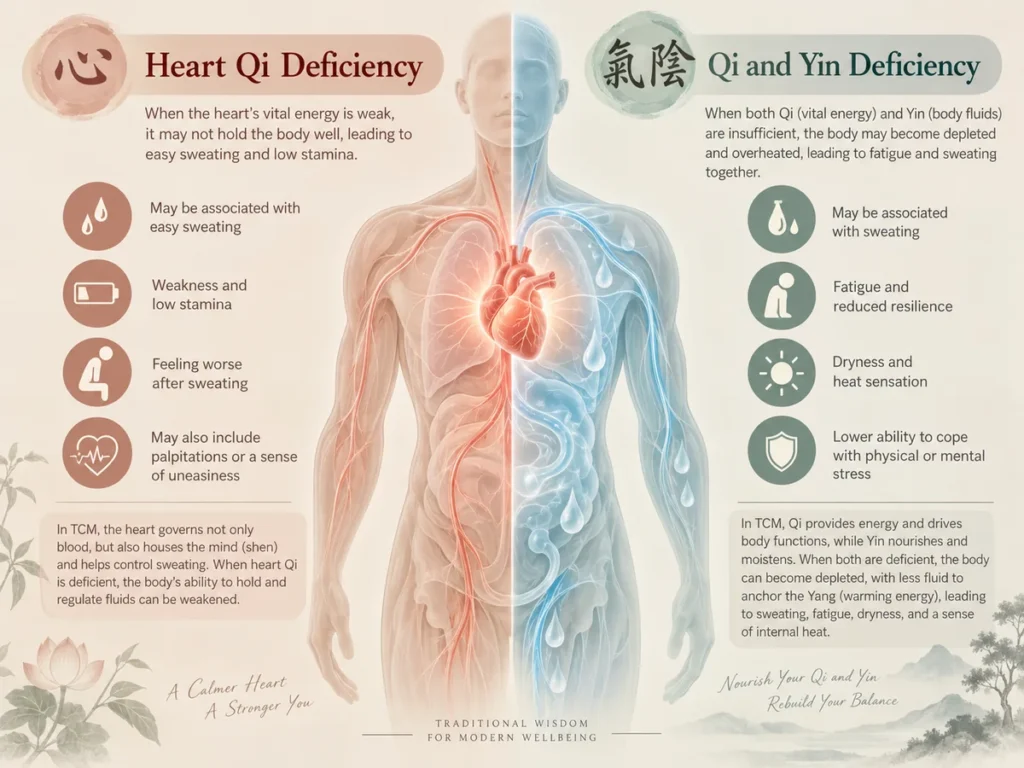
From a Traditional Chinese Medicine perspective, the speaker connects persistent sweating with Heart qi deficiency pattern. In this framework, qi refers to a traditional functional concept rather than a measurable substance. Heart qi deficiency pattern is also a TCM pattern name. It does not mean that the anatomical heart is weak or damaged.
The video says that continued sweating may gradually contribute to a combined qi and yin deficiency pattern. Qi deficiency pattern is traditionally associated with weakness, fatigue, and spontaneous sweating. Yin deficiency pattern refers to insufficient yin fluids and reduced moistening or restraining functions within TCM theory. Neither term is equivalent to anemia, heart disease, dehydration, or another biomedical diagnosis.
This distinction matters. Fatigue and sweating can have many explanations outside TCM, so the traditional pattern should be considered an interpretive framework rather than proof of why the symptoms are occurring.
Traditional Herbal Approach Mentioned in the Video
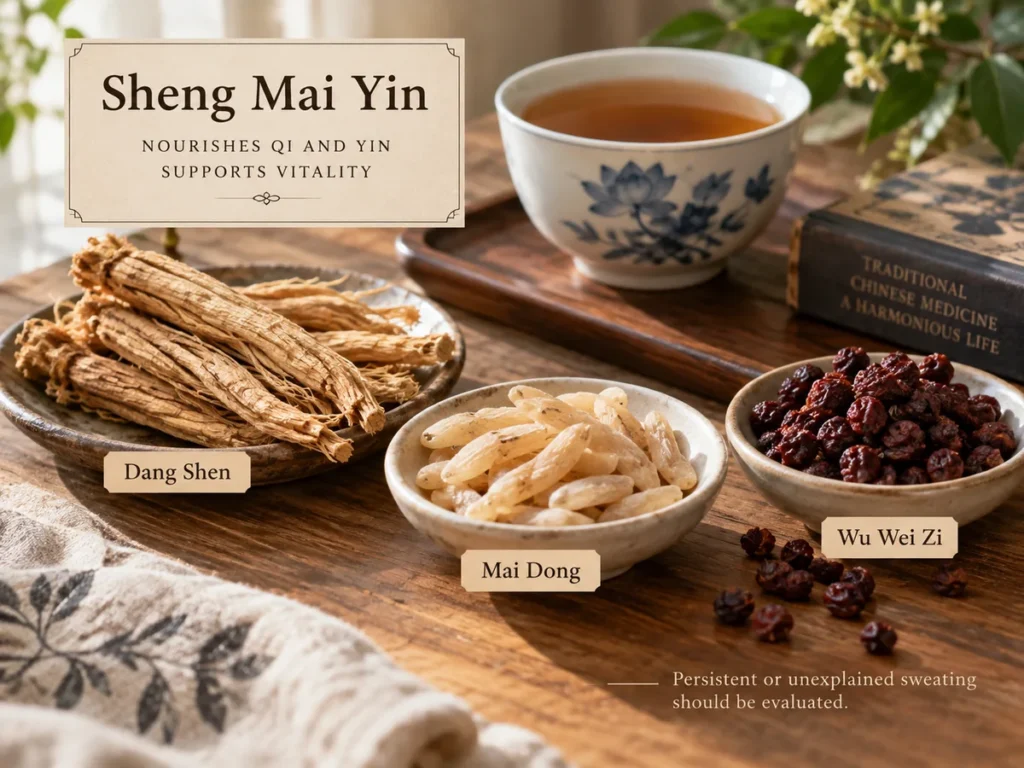
The video introduces Sheng Mai Yin, often translated as Generate the Pulse Drink. The speaker gives the following preparation:
- Dang Shen (Codonopsis root), 15 grams
- Mai Dong (ophiopogon tuber), 9 grams
- Wu Wei Zi (schisandra fruit), 6 grams
The herbs are described as being simmered in water. In the language used by the video, the formula is traditionally associated with supporting qi, restoring the pulse, nourishing yin, and generating fluids. These are traditional actions within TCM. They should not be read as proven treatment effects for excessive sweating or fatigue.
The video presents this as a simple three-day home preparation, but a short video cannot account for a person’s medicines, allergies, pregnancy status, health conditions, or the reason for sweating. Herbal products may also vary in identity and quality. A qualified health professional or experienced TCM practitioner can help determine whether this formula is appropriate and how it should be prepared. Do not use the ingredient amounts as a substitute for individualized advice.
When Fatigue and Sweating Need Medical Attention
Sweating is normal during heat, exercise, or emotional stress. Unexplained or excessive sweating deserves medical attention when it persists, interferes with daily life, occurs mainly at night, or appears with other concerning symptoms. MedlinePlus advises seeking care when sweating is accompanied by fever, weight loss, chest pain, shortness of breath, or a rapid pounding heartbeat. Sudden severe symptoms need prompt medical evaluation.
Final Note
TCM body patterns differ from person to person, and similar symptoms may arise for different reasons. The relationship between fatigue and sweating described here comes from one traditional medicine video and is provided for herbal and wellness education. It is not a medical diagnosis or a treatment plan. Consult a qualified healthcare professional for persistent, severe, sudden, or unexplained sweating, and seek professional guidance before using a traditional herbal formula.
Further Reading
Explore more traditional herbal wellness articles.