
If you are exploring chinese herbs for insomnia, it helps to separate a traditional explanation from a medical diagnosis. The source video presents sleeplessness through a Traditional Chinese Medicine framework and names a five-herb decoction. It does not claim that every case of insomnia has the same cause. Modern health sources also note that sleep trouble can have many causes, so persistent problems deserve proper assessment. This article explains only what the video says, translates its TCM language into clear English, and adds practical safety context for readers considering herbs.
Common Signs You May Notice
The video identifies one main concern: insomnia. It does not specify whether the speaker means trouble falling asleep, waking during the night, or waking too early. Those details matter in real care, so readers should avoid filling in symptoms that the source never mentioned.
- Ongoing difficulty sleeping, described in the video simply as insomnia
How TCM Traditionally Explains Chinese Herbs for Insomnia
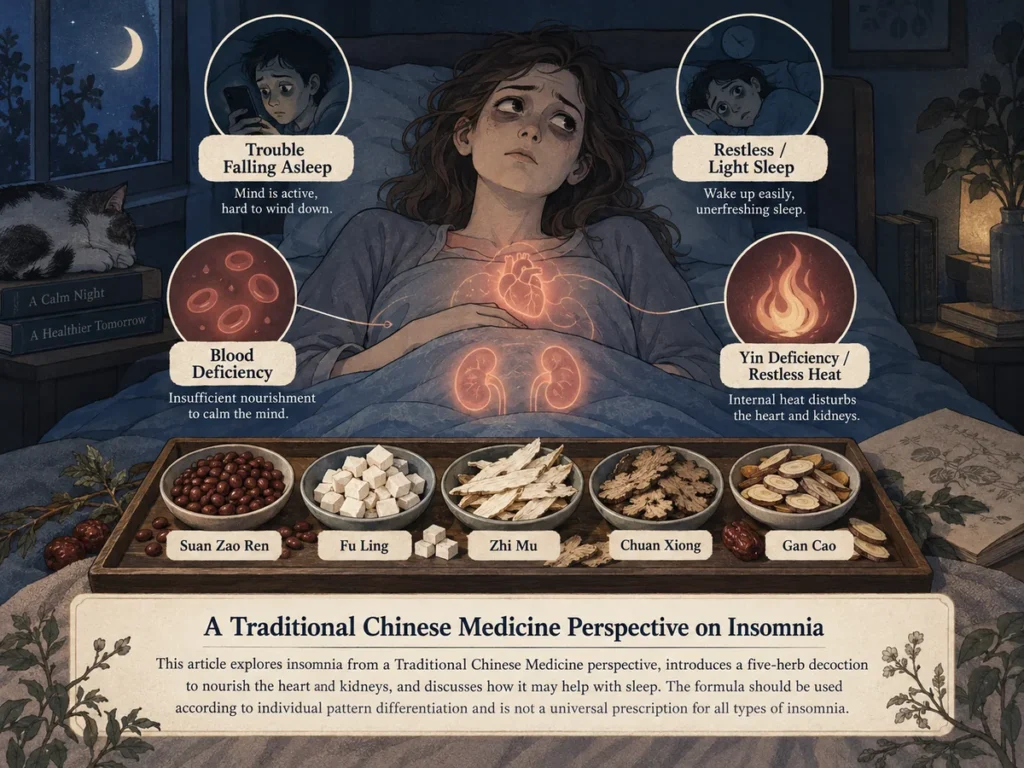
From a Traditional Chinese Medicine perspective, the video begins with Blood deficiency. In TCM, Blood deficiency pattern is a traditional pattern describing insufficient nourishing function attributed to blood. It is not the same as anaemia or another biomedical blood disorder.
The speaker then links Blood deficiency with Yin deficiency and internal heat. The terminology table describes Yin deficiency pattern as reduced moistening or restraining function within the TCM framework. Deficiency heat is also a traditional pattern term, not proof of infection, inflammation, menopause, or an endocrine condition. In the video’s sequence, this traditional deficiency heat disturbs the Heart and Kidney systems and contributes to poor sleep. Here, Heart and Kidney refer to TCM functional systems, not diagnosed disease in the anatomical organs.
This layered explanation is why chinese herbs for insomnia are usually discussed by pattern rather than by symptom alone in TCM practice. Another person with the same sleep complaint could receive a different traditional explanation after an individual assessment.
The Five Herbs Named in the Video
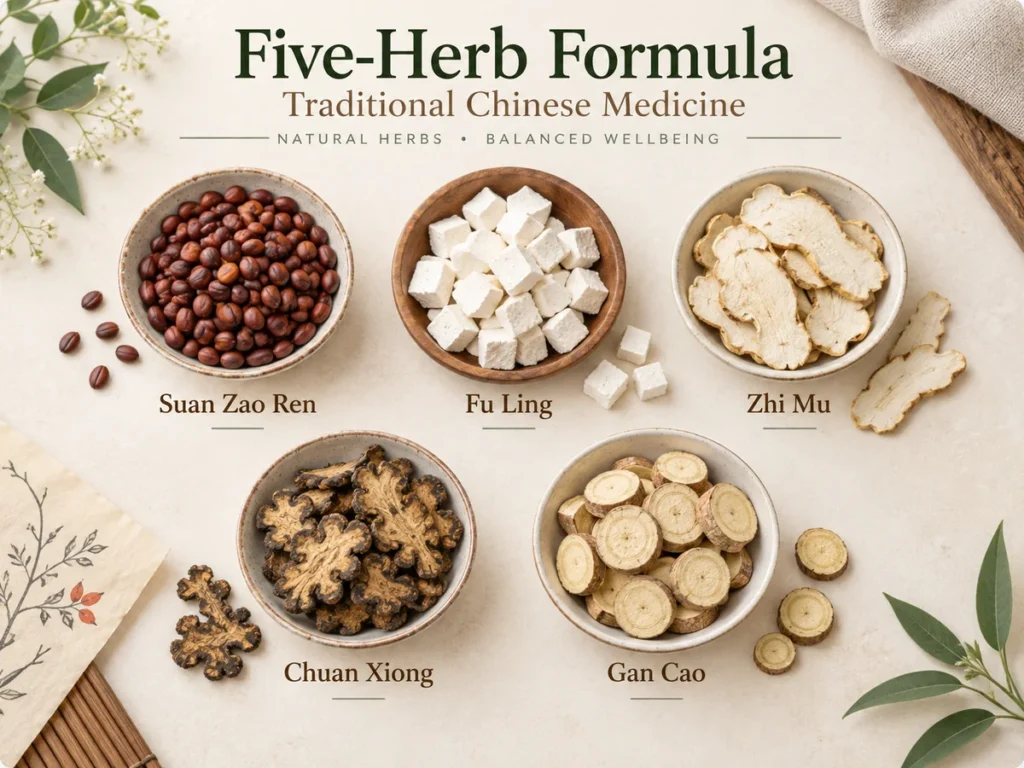
The video gives a specific combination rather than a general list of medicinal herbs for insomnia. It names the following ingredients and amounts:
- Sour jujube seed (Suan Zao Ren), 30 g
- Poria (Fu Ling), 10 g
- Anemarrhena rhizome (Zhi Mu), 10 g
- Chuanxiong rhizome (Chuan Xiong), 10 g
- Licorice root (Gan Cao), 3 g
Within the source’s TCM explanation, the combination is presented as a traditional herbal remedy for insomnia associated with deficiency and internal heat. The video does not provide evidence that the mixture works for every reader, compare it with standard insomnia care, or discuss contraindications. For that reason, it should not be described as a cure or as a universally suitable herbal tea for insomnia.
The phrase chinese herbal medicine for insomnia can sound like one fixed treatment. TCM formulas are commonly selected or adjusted according to the person’s full pattern, current medicines, age, health history, and other factors. A list copied from a short video cannot replace that assessment.
How the Video Prepares the Decoction
The speaker instructs viewers to add water, simmer the five ingredients for 30 minutes, take the liquid warm, and drink it once in the morning and once in the evening. This is a faithful summary of the source, not a personal prescription. The video does not state the water volume, treatment duration, product quality standard, or circumstances in which the formula should be stopped.
Safety Before Using Chinese Herbs for Insomnia
Ask a qualified healthcare professional and a properly trained Chinese medicine practitioner before preparing this formula. Herbs can cause adverse effects, interact with prescription or over-the-counter medicines, and vary in identity or quality. Extra care is appropriate during pregnancy or breastfeeding, for children and older adults, and for anyone with chronic medical conditions or multiple medicines.
Insomnia can also be related to stress, pain, medicines, substance use, sleep apnea, mood conditions, or other health problems. Seek medical advice if sleep difficulty persists, affects daytime functioning, or occurs with concerning symptoms. Do not stop prescribed treatment in order to try chinese herbs for insomnia.
Final Note
TCM patterns vary from person to person, and similar sleep complaints may have different causes. This article is for education about traditional herbal practice and the content of one video. It is not a diagnosis or treatment plan. Persistent, severe, or unexplained insomnia should be assessed by a qualified healthcare professional.
Further Reading
Explore more traditional herbal wellness articles.