Introduction
Belly fat and bloating can feel like the same problem, especially when your abdomen stays large and becomes more distended after eating. The video behind this article describes a person whose weight remains high despite not eating much, with an oily feeling in the hair and skin, poor digestion, and bowel movements that are not smooth. It also mentions persistently high blood lipids. These signs can have many causes, so the clip’s Traditional Chinese Medicine explanation should not be treated as a diagnosis.
The video’s focus is a traditional pattern involving cold and retained dampness. That language can help explain the speaker’s TCM reasoning, but it does not prove why someone gains weight, feels bloated, or has an abnormal cholesterol result.
Common Signs You May Notice
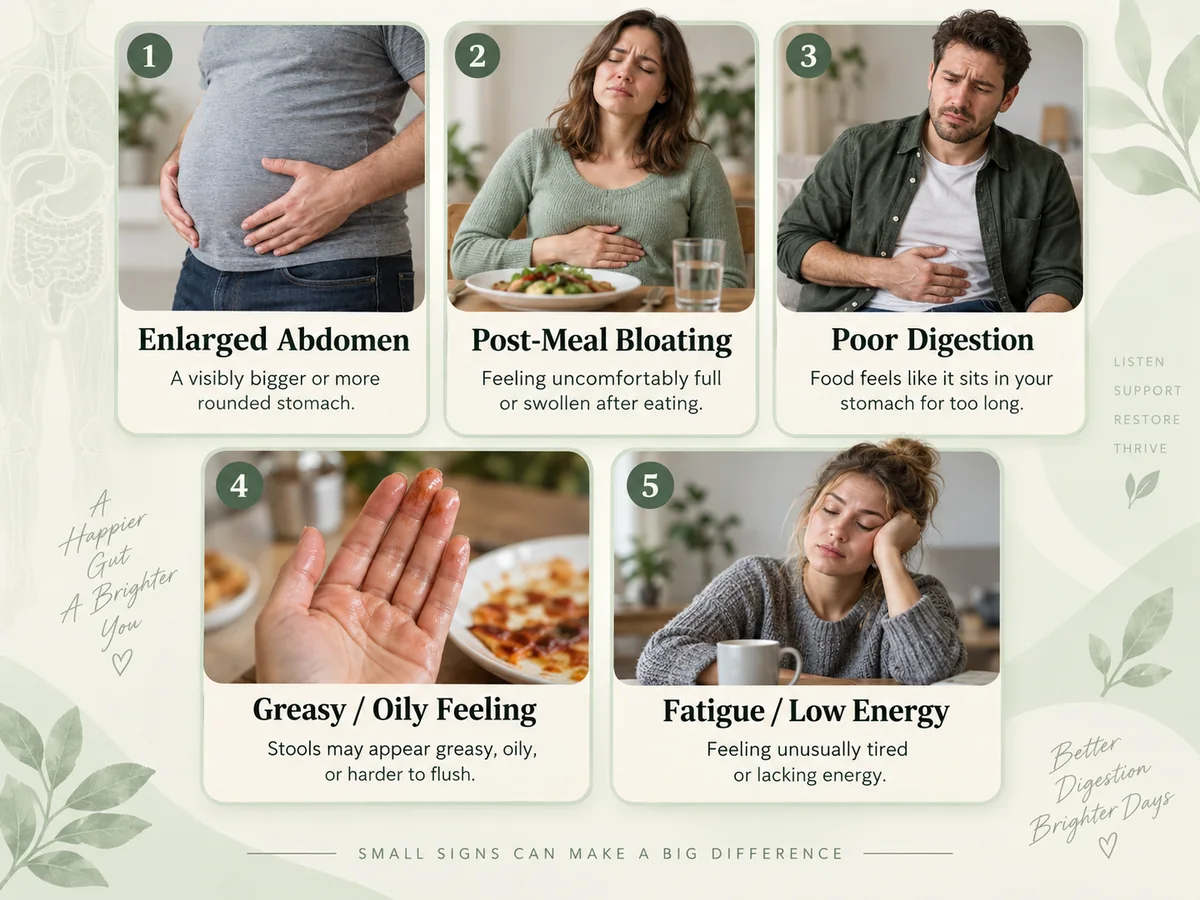
The speaker groups the following experiences together:
- A large or persistent lower abdomen
- Weight that remains high or is difficult to reduce
- A swollen or distended abdomen after eating
- Poor digestion
- Bowel movements that do not feel smooth or easy
- Hair and skin that feel unusually oily
- Low physical strength or a weak, tired feeling
This list reflects only the video. It does not establish that these features share one medical cause. In everyday health information, constipation and bloating may occur together, but regular or persistent bloating deserves individual assessment rather than an online pattern label.
How TCM Explains Belly Fat and Bloating
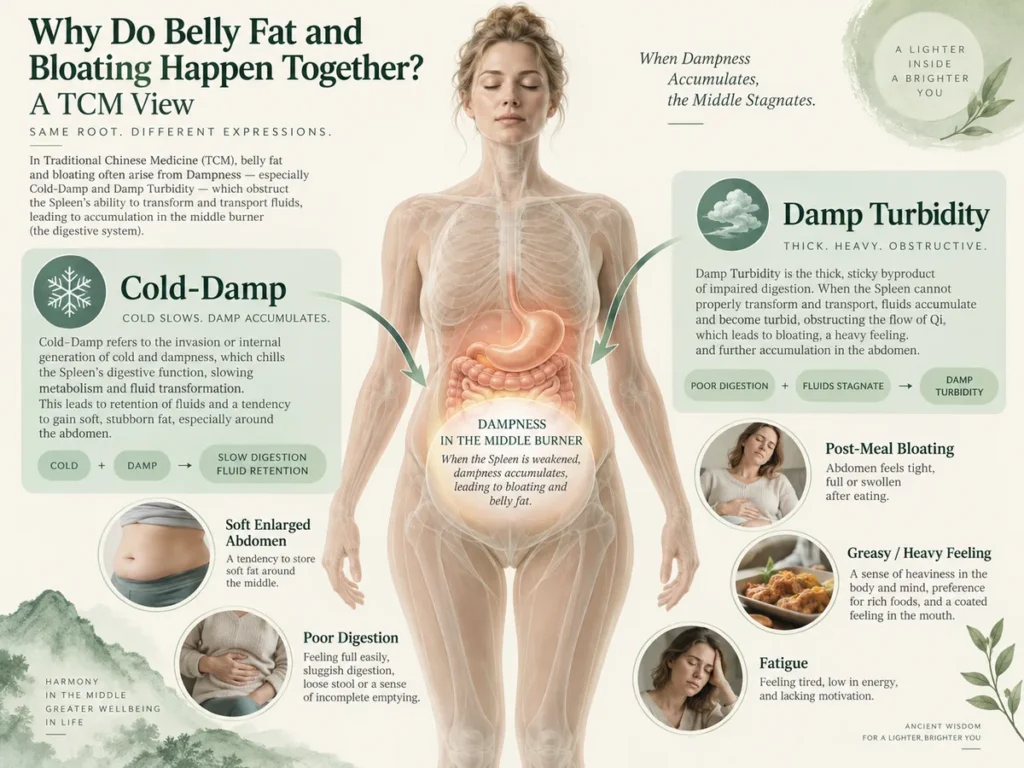
From a Traditional Chinese Medicine perspective, the speaker describes cold-dampness and accumulated damp turbidity. Cold-dampness is a traditional theory concept combining cold and dampness. Internal dampness describes retained fluids within the TCM framework and may be associated with heaviness, abdominal distension, poor appetite, or loose stools in other contexts. Neither term is a biomedical disease, and neither means that literal moisture or humidity is trapped in the body.
The video links this traditional pattern with impaired metabolism, an enlarged abdomen, weakness, an oily appearance, and difficulty losing weight. That is the speaker’s TCM interpretation. It should not be rewritten as proof that dampness causes obesity, high cholesterol, or a digestive disorder. TCM dampness symptoms are considered as part of a broader pattern, not identified from body size or one digestive complaint alone.
Belly fat and bloating are also not interchangeable. Body fat changes over time, while abdominal distension may vary after meals or with bowel habits. The clip discusses both together, but a clinician may need to consider diet, medicines, constipation, food intolerance, and other possible causes when symptoms persist.
What the Video Says About High Cholesterol
The speaker refers to blood lipids that remain high and presents damp turbidity as a TCM explanation. High cholesterol itself usually has no symptoms, so oily skin, abdominal size, or symptoms of poor digestion cannot confirm it. A blood test is needed to measure cholesterol and triglycerides, and treatment decisions should be made with a qualified health professional.
Do not stop, replace, or avoid prescribed cholesterol medicine because of a short herbal video. If you already have a high result, discuss the complete lipid profile, cardiovascular risk, and any complementary products with your clinician.
Traditional Herbal Approach Mentioned in the Video
The clip suggests steeping an item transcribed as “Lingqi” in hot water and describes it as traditionally used to support qi and address turbid dampness. The brief transcript does not identify the ingredient clearly enough for safe preparation, and it gives no verified botanical name, amount, product label, or contraindications. For that reason, this article does not turn the statement into a recipe.
Herbal products can vary in identity and quality and may interact with medicines. Ask a qualified TCM practitioner, pharmacist, or other health professional to verify the original product and your medication list before use. This is especially important when taking cholesterol-lowering medicine or medicines for other long-term conditions. A tea should not be presented as a substitute for testing, prescribed treatment, or evaluation of persistent bloating after meal symptoms.
Final Note
TCM body patterns vary between people, and the same signs may have different causes. This article is for education about traditional herbal and wellness concepts and does not provide a medical diagnosis. Seek professional advice for belly fat and bloating that persist, worsen, or occur with unexplained weight change, severe pain, vomiting, blood in the stool, or ongoing constipation. Confirm any herbal ingredient before taking it.
Further Reading
- when bloating needs medical review
- cholesterol testing and screening
- safety of Chinese herbal products
Explore more traditional herbal wellness articles.