Phlegm Dampness: Overview
Have you been feeling heavy, sluggish, and tired even after a full night’s sleep? Does your belly feel tight and puffy, your head foggy, or your throat oddly “stuck” — as if something is there that you can never quite swallow or cough out? Maybe your stools are loose, and you notice mild puffiness that comes and goes. In Traditional Chinese Medicine (TCM), a cluster of feelings like this is often described as phlegm dampness in the body. This article explains what phlegm dampness means in plain language, the signs people commonly notice, and one traditional herbal soup that may support the body’s natural balance.
Common Signs You May Notice
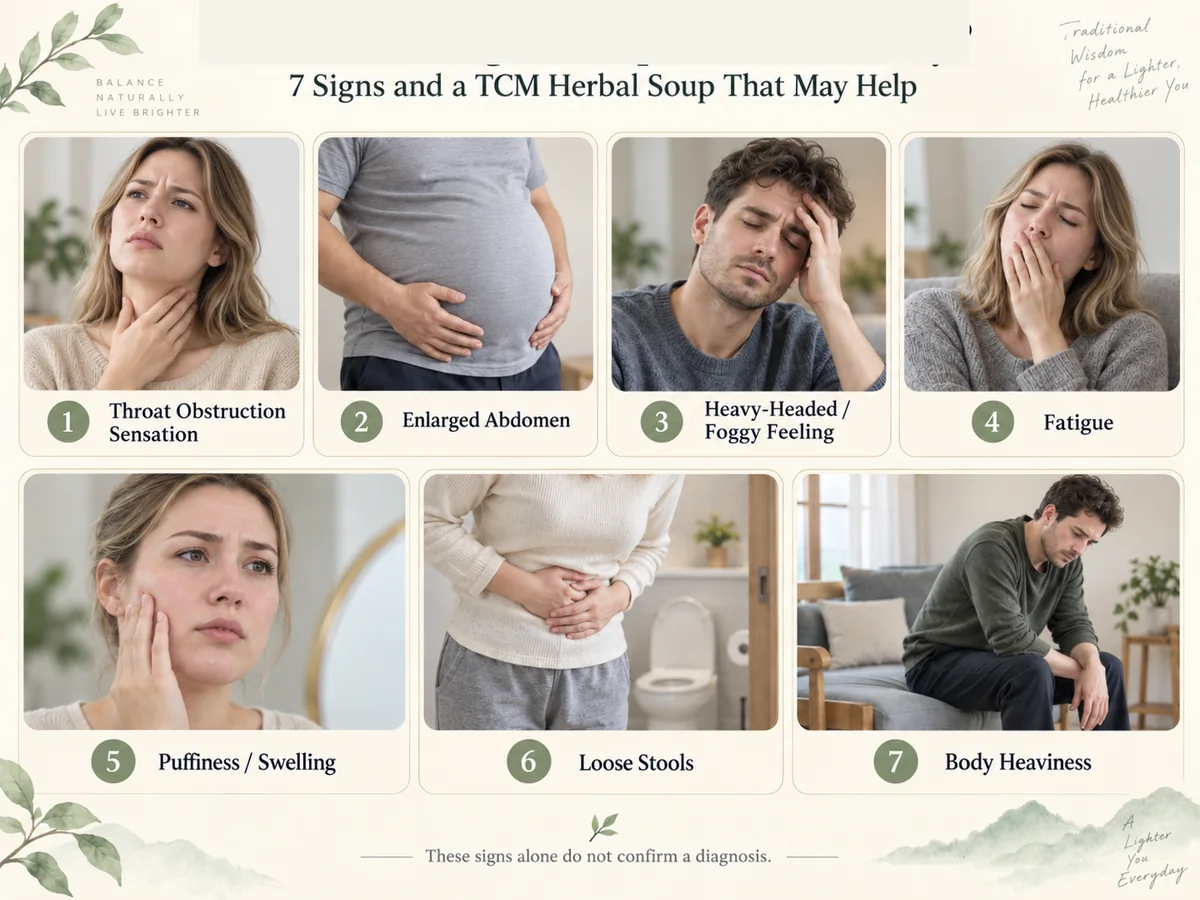
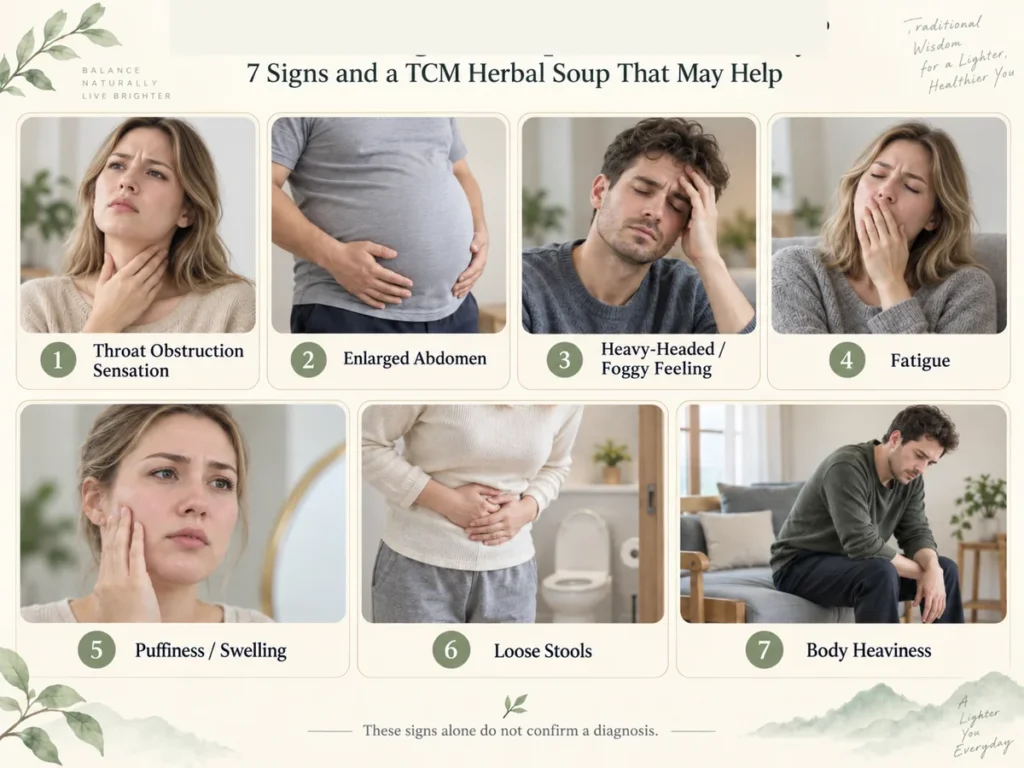
A TCM practitioner shares the following signs that often point to phlegm dampness. You may notice one, several, or all of them:
- A stuck or lump-like feeling in the throat, as if something is there that you cannot swallow away or cough out
- A growing or heavy belly, even when your overall weight has not changed much
- A heavy, foggy, or “swollen” sensation in the head
- Feeling tired and low in energy for no clear reason
- Mild puffiness or swelling that comes and goes
- Loose, unformed stools
- A general sense that your body feels heavy, sticky, or damp
These are everyday descriptions of how the body can feel out of balance — not a medical diagnosis.
How TCM Traditionally Explains It
In TCM, phlegm (tán) means more than the mucus you cough up. There is also a traditional concept often called “invisible phlegm”: a thick, turbid substance that is not coughed out, but is thought to gather inside the body and interfere with how the organs and meridians work. When dampness builds up over time and becomes thicker and stickier, TCM describes the result as phlegm dampness.
Where does it tend to settle? The practitioner points to the Spleen. In TCM, the Spleen is a functional system — not the anatomical organ — said to “transport and transform” fluids. When this system is not working smoothly, fluids may fail to move properly and gradually turn into dampness, then into phlegm. In TCM terms, this pattern is called Damp Phlegm Pattern (tán shī), often seen together with Spleen Qi Deficiency. In Traditional Chinese Medicine, Damp phlegm pattern is a pattern concept describing a traditional pattern involving internal accumulation of dampness and phlegm. It is not a biomedical diagnosis, and it does not refer to the anatomical spleen or to any specific modern disease.
Traditional Herbal / Lifestyle Approach
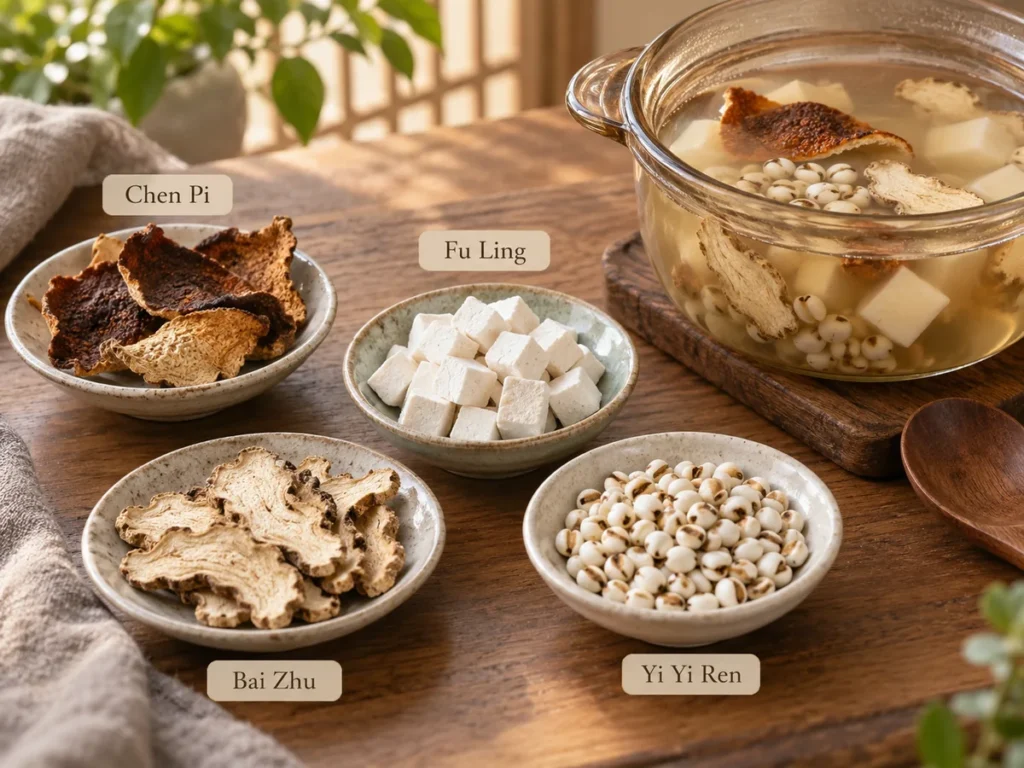
The video also shares a simple kitchen-style approach: a soup made with four common herbs, simmered with a little lean meat — or prepared as a herbal tea if you prefer to skip the meat. Each ingredient has a traditional role in TCM:
- Chen pi (dried tangerine peel) — traditionally used to regulate qi, strengthen the Spleen, dry dampness, transform phlegm, and harmonize the stomach
- Fu ling (Poria) — traditionally used to strengthen the Spleen and drain dampness
- Bai zhu (Atractylodes macrocephala) — traditionally used to strengthen the Spleen and dry dampness
- Yi yi ren (Coix seed) — traditionally used to support the body’s fluid metabolism and help remove dampness
The video describes this combination as suitable for people who tend to have sticky, excess phlegm and a heavy, sluggish body — the kind of body TCM calls a phlegm dampness constitution. As with any traditional remedy, it is meant to be chosen according to your own body pattern, ideally with guidance from a qualified TCM practitioner. These descriptions reflect traditional usage, not proof that the herbs treat or cure any condition.
Final Note
TCM body patterns differ from person to person, and the same symptoms can have many possible explanations. This article is provided for educational purposes about traditional herbal and wellness knowledge. It is not medical advice, and nothing here claims that any herb or soup can diagnose, treat, or cure disease. If your symptoms are persistent, severe, or unexplained, please consult a qualified healthcare professional.
Explore more traditional herbal wellness articles.
Further Reading
NCCIH information on Traditional Chinese Medicine and herbal product safety.