
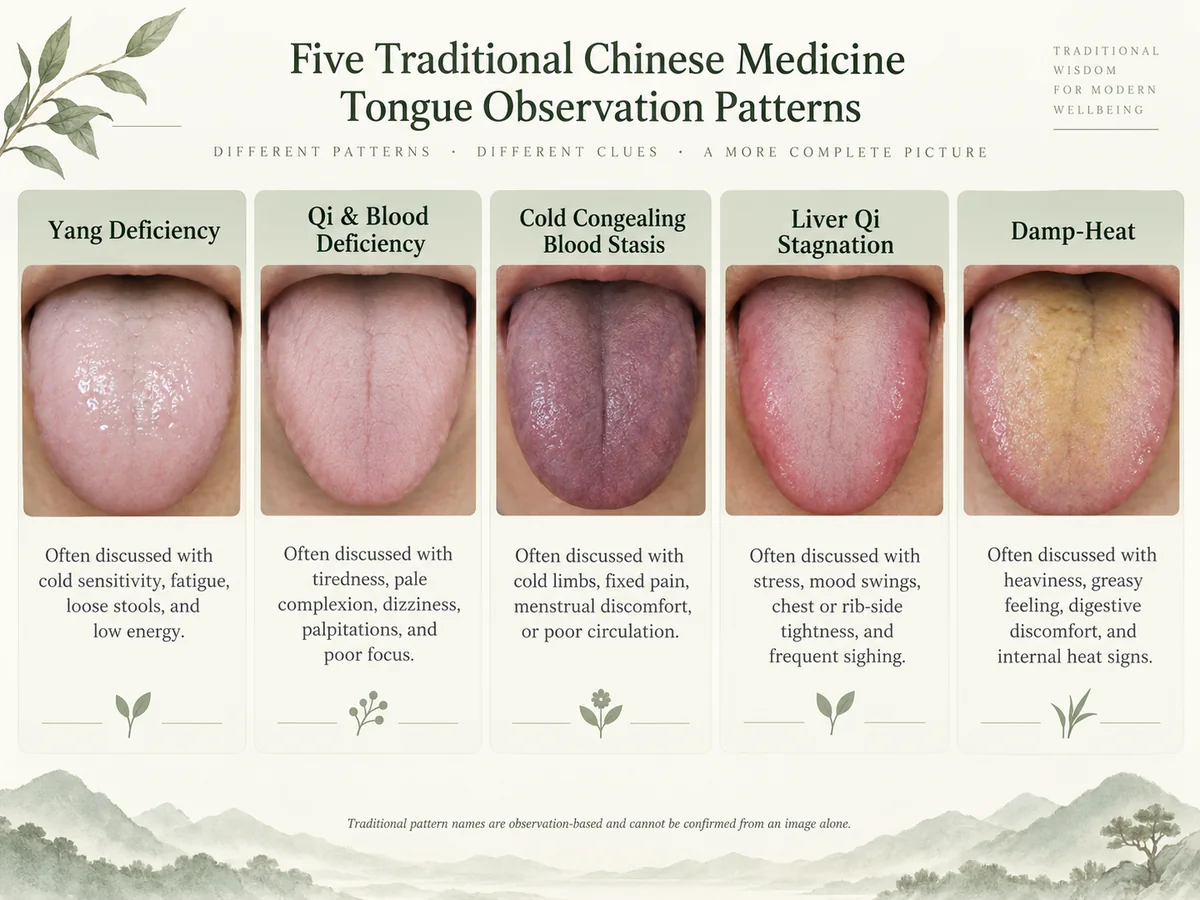
Chinese medicine tongue diagnosis often attracts attention because a single image can seem to promise a quick answer. The short video behind this article compares a healthy tongue with examples labeled as five traditional patterns: Yang deficiency, Qi and blood deficiency, cold with Blood stasis, Liver qi stagnation, and Damp heat. The transcript does not describe the tongue color, coating, moisture, shape, or other visual details for any example. This article therefore explains only the pattern names used in the clip and the limits of reading them from an image.
What the Video Compares
The clip presents one healthy example and five examples associated with traditional TCM pattern categories. It does not say that one tongue feature proves any pattern, and it does not provide a treatment, herbal formula, tea, food, or lifestyle instruction. That narrow scope matters. A visual comparison can introduce traditional terminology, but it cannot show how a practitioner reached a full pattern assessment.
How Chinese Medicine Tongue Diagnosis Uses Pattern Language
In TCM, a pattern is a traditional way of organizing observations. It is not the same as a biomedical disease. The names in the video refer to relationships within the TCM framework, and they should not be translated into claims about an anatomical organ, a blood test, circulation, infection, or another modern diagnosis.
A careful tongue diagnosis traditional Chinese medicine discussion also keeps the source separate from the interpretation. Here, the source identifies pattern labels but gives no verbal description of the pictures. Adding a color, coating, crack, tooth mark, swelling, or other sign would go beyond the transcript.
Five Traditional Pattern Categories Named in the Video
Yang Deficiency Pattern
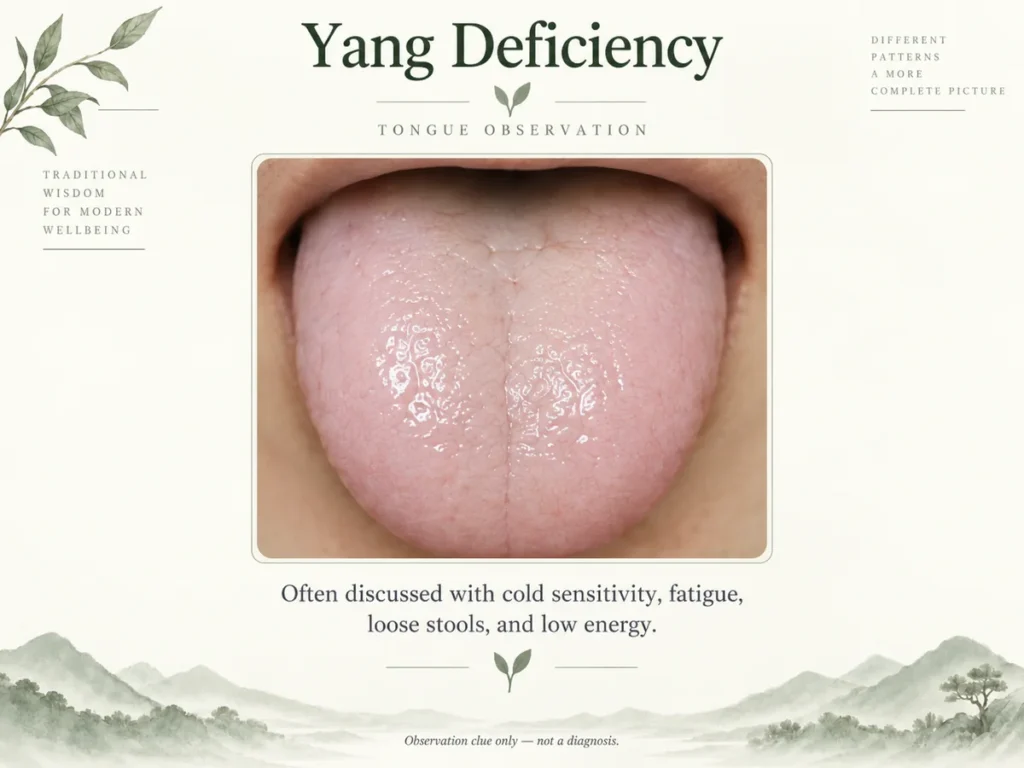
The video names insufficient yang qi as one comparison category. In standardized TCM language, Yang deficiency pattern describes reduced warming and activating functions attributed to yang qi. It is a traditional pattern concept, not proof of hypothyroidism, poor circulation, or another biomedical condition.
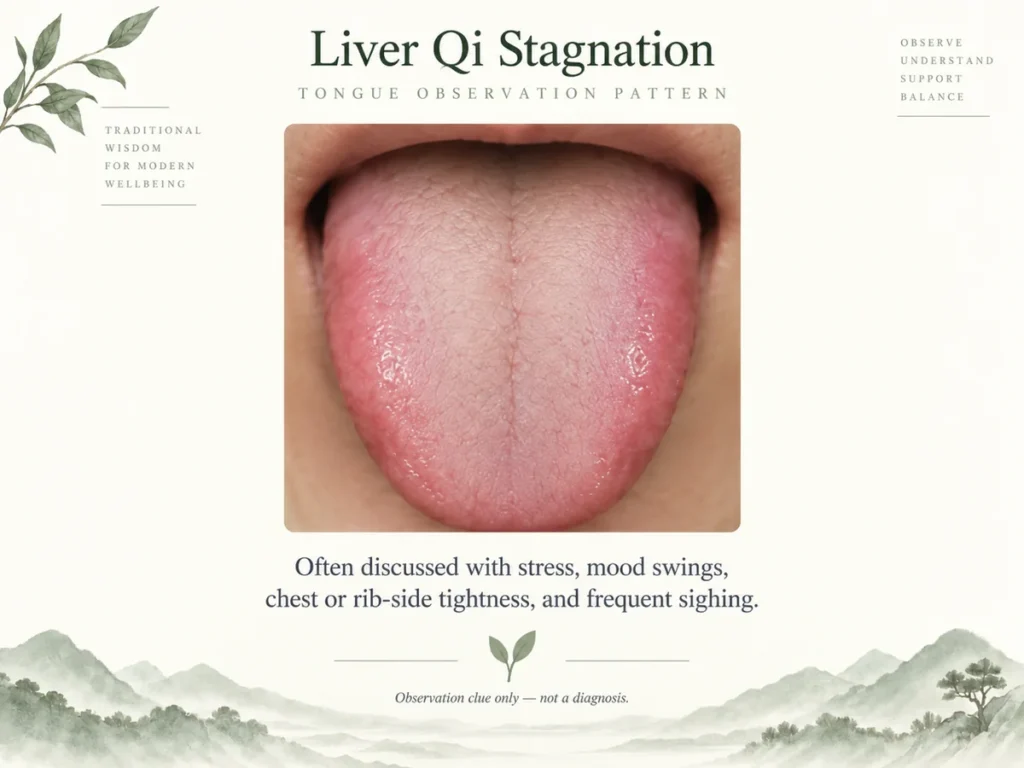
Qi and Blood Deficiency Pattern
The next category is Qi and blood deficiency pattern. TCM uses this name when the traditional functions attributed to qi and blood are both considered insufficient. The term must not be equated with anemia, low blood volume, or a laboratory finding. The clip does not describe which tongue features led to this label.
Cold With Blood Stasis
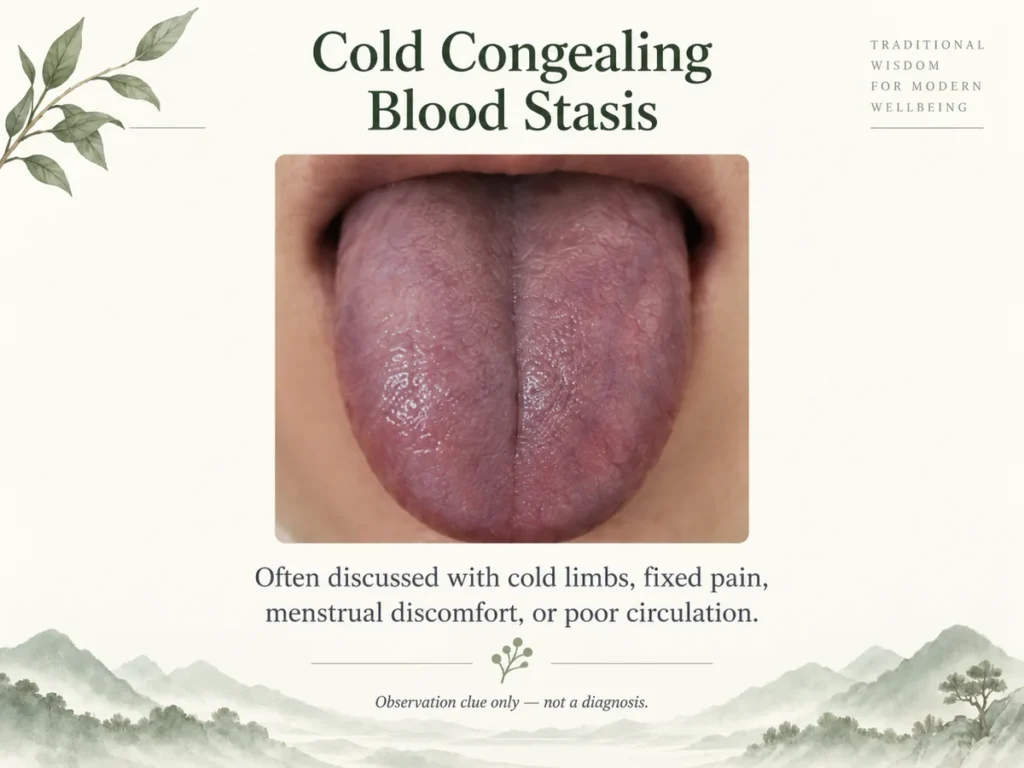
The transcript then names cold congealing with Blood stasis. Blood stasis pattern is a TCM concept describing slowed or stagnant blood movement within the traditional framework. It is not thrombosis, a blood clot, or confirmed vascular disease. Because the clip supplies no visual explanation, the image should not be used to infer any of those conditions.
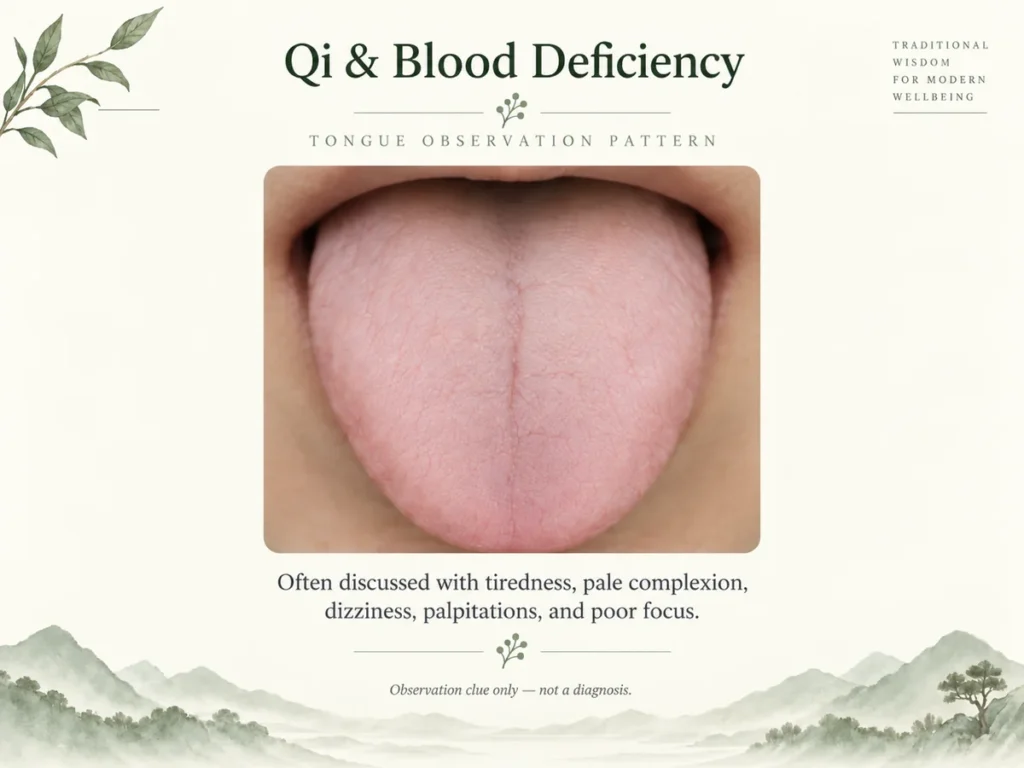
Liver Qi Stagnation Pattern
Liver qi stagnation pattern is another traditional category in the video. In TCM, it describes impaired free flow of qi in the liver functional system. The word Liver refers to a TCM functional system in this context, not a diagnosis of liver or gallbladder disease. The transcript does not connect this label to a specific tongue color or shape.
Damp Heat Pattern
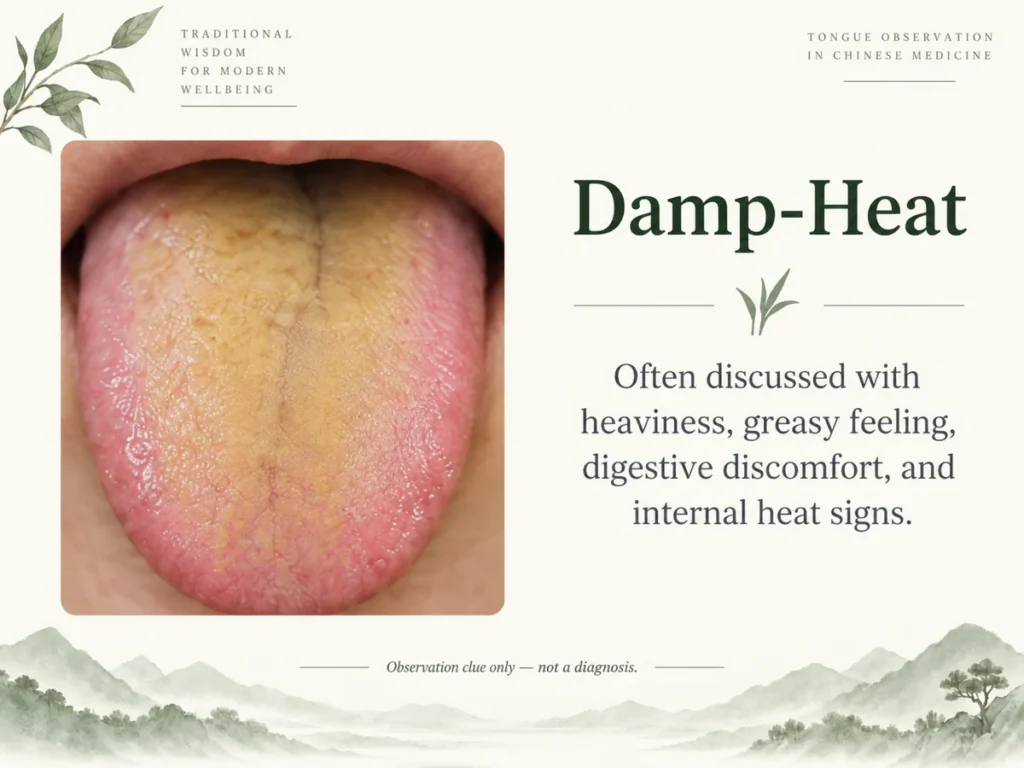
The final category is Damp heat pattern. TCM uses this term for a traditional pattern in which dampness combines with heat. It should not be presented as infection, inflammation, or a urinary or digestive disease. As with the other examples, the video labels the comparison but does not state the visual criteria behind it.
Why a Tongue Image Is Not a Diagnosis
A traditional Chinese medicine tongue diagnosis normally belongs to a broader assessment rather than a stand-alone photo judgment. Lighting, camera settings, food and drink, oral products, and the timing of a photograph can change how a tongue looks. More importantly, the clip gives no symptom history, examination notes, or explanation of how the labels were chosen.
Use this comparison as an introduction to TCM vocabulary, not as a self-diagnosis chart. A tcm tongue diagnosis based on one image cannot confirm a traditional pattern or exclude a medical or dental problem. Persistent, painful, or unexplained tongue changes deserve assessment by a qualified health professional.
Final Note
Traditional patterns vary from person to person, and similar tongue appearances may have different explanations. This article supports education about chinese medicine tongue diagnosis and does not provide a medical diagnosis. If a tongue change continues, causes discomfort, or has no clear explanation, consult a qualified medical or dental professional.
Explore more TCM tongue diagnosis guidance.