
Introduction
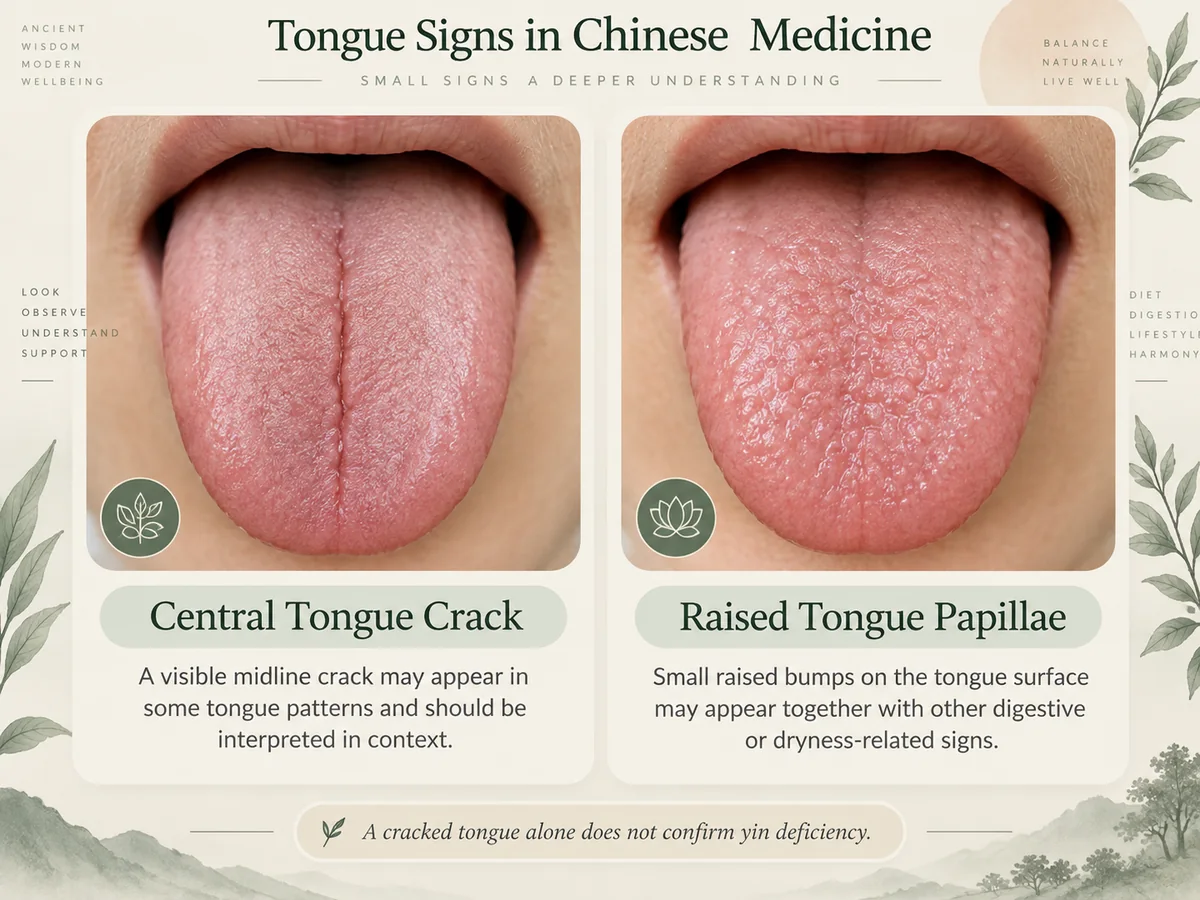
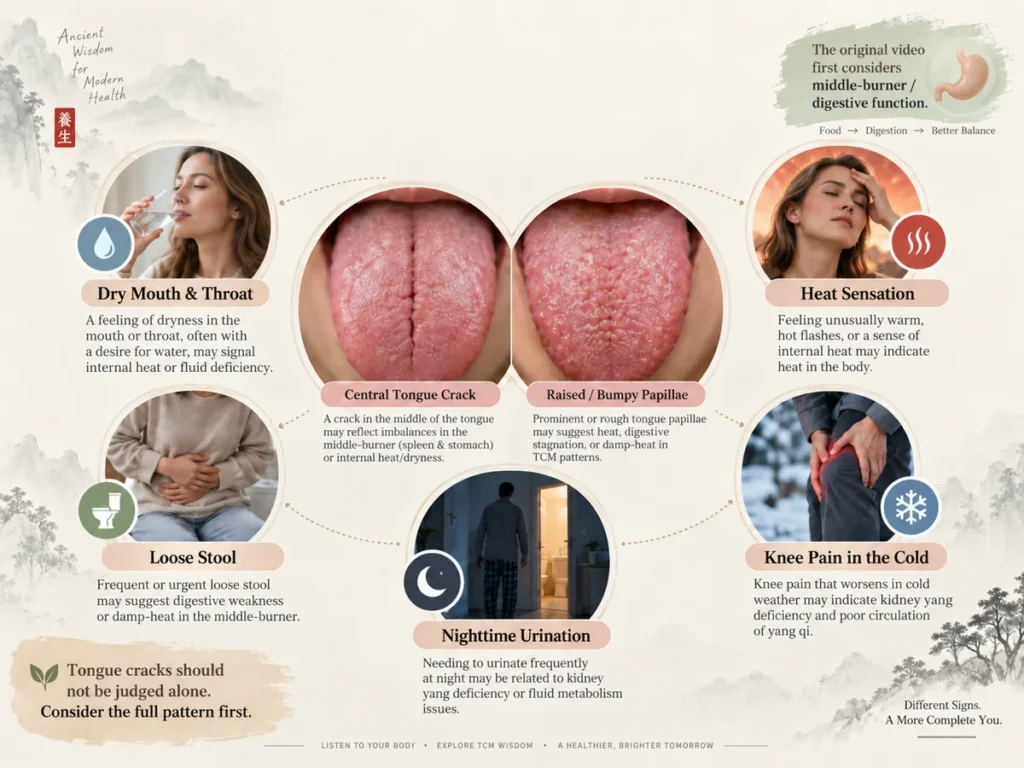
A deep line across the center of the tongue can make people wonder whether it reveals a hidden problem. Searches for Chinese medicine tongue cracks often lead to broad claims, but one tongue feature cannot diagnose a condition by itself. The source video describes a specific combination: a central crack and small raised points on the tongue, together with dry mouth, dry throat, restlessness, a sensation of heat, loose stools, frequent nighttime urination, and knees that hurt in cold weather. It then offers a Traditional Chinese Medicine interpretation of why signs that seem hot and cold may appear together.
Common Signs You May Notice
The video focuses on the following observations and body sensations:
- a prominent crack through the center of the tongue
- small raised points across the tongue surface
- dry mouth and dry throat
- restlessness or an uncomfortable sensation of heat
- loose stools or diarrhoea
- frequent urination at night
- knee pain that becomes noticeable in cold conditions
These signs come from the video only. They should not be treated as a checklist for self-diagnosis, because similar symptoms can arise for many unrelated reasons.
How TCM Traditionally Explains Chinese Medicine Tongue Cracks
From a Traditional Chinese Medicine perspective, the video first considers Yin deficiency pattern because dryness, heat sensations, and a tongue with raised points may fit that traditional framework. In TCM, Yin deficiency pattern describes insufficient yin fluids and reduced moistening or restraining function. It is a traditional pattern concept, not dehydration, an endocrine disorder, or another biomedical diagnosis.
The speaker then argues that the full picture is more complicated. In the video’s language, the central tongue crack suggests that the middle energizer, or middle jiao, is not functioning smoothly. The middle energizer is a TCM functional region associated with digestion and the movement of substances through the body. It is not a physical tube or a proven anatomical blockage.
The video also uses the classical images of Heart fire failing to descend and Kidney water failing to rise. These are traditional explanatory metaphors within TCM. They do not mean that the heart is literally burning or that water from the kidneys must move upward. The purpose of this language is to describe a pattern in which dryness and heat sensations appear beside loose stools, nighttime urination, and sensitivity to cold.
Why the Signs Seem Mixed
The central lesson is that Chinese medicine tongue cracks are interpreted in context rather than from appearance alone. If someone notices only dryness and heat, a simple Yin deficiency explanation may appear convincing. The video warns that focusing only on that surface impression could overlook digestive and cold-related signs.
For this reason, the speaker says that attempts to nourish yin or clear heat did not help the example being discussed and reportedly caused discomfort. This is an account from the source video, not evidence that those approaches are harmful for everyone. It shows why TCM practitioners traditionally consider the tongue together with bowel habits, urination, temperature sensitivity, sleep, appetite, and other observations before naming a pattern.
Traditional Approach Described in the Video
The video recommends addressing the middle energizer first, then reassessing whether nourishing yin or clearing heat is appropriate. In plain language, its traditional sequence is to support the TCM Spleen and Stomach functional systems before choosing a more specific pattern-based approach.
No herb, formula, dose, tea, food, or acupressure method is named in the source. For that reason, this article does not add a remedy. Chinese medicine cracked tongue content can easily drift into treatment claims, but a safe plan depends on the person’s full history, current medicines, and the actual cause of symptoms. Anyone considering Chinese herbs should speak with a qualified practitioner and tell their medical clinician about all products they use.
When to Seek Conventional Care
A tongue crack may be harmless, but a new or changing tongue appearance deserves attention when it comes with pain, swelling, ulcers, white patches, bleeding, difficulty eating or drinking, or symptoms that do not improve. The NHS advises seeing a doctor or dentist when tongue pain or itchiness persists or worsens, or when white patches are present. Ongoing diarrhoea, repeated nighttime urination, or unexplained knee pain also should not be attributed to a TCM pattern without medical assessment.
Final Note
TCM constitutions and pattern interpretations vary from person to person, and the same symptoms can have different causes. This article presents the traditional explanation given in one video for Chinese medicine tongue cracks. It is for traditional herbal and wellness education and does not provide a diagnosis. Seek qualified medical care for persistent, severe, rapidly changing, or unexplained symptoms.
Further Reading
Explore more TCM tongue diagnosis guidance.